politics
3 Reasons the Supreme Court Isn't Trump's Court: Armstrong Williams
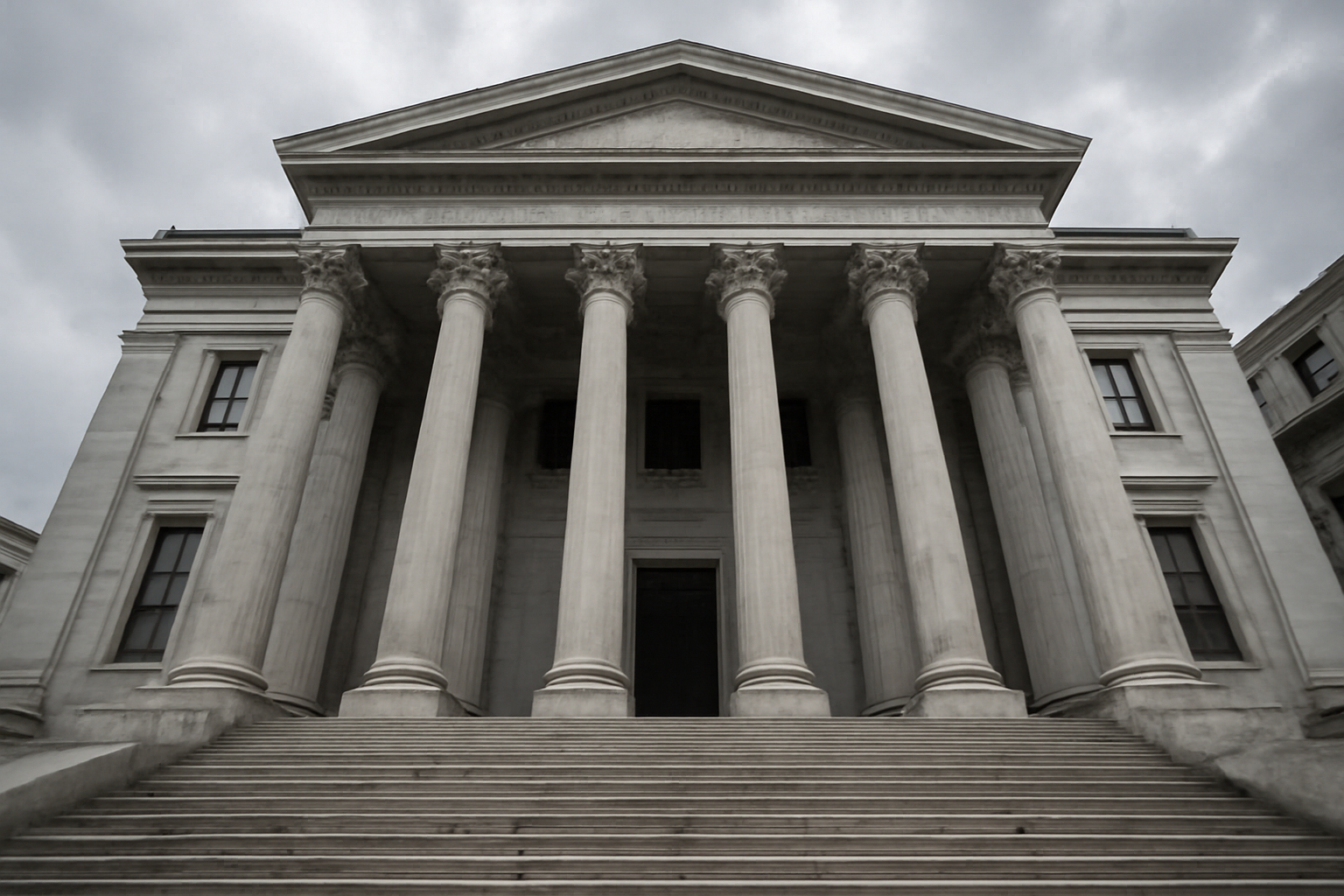
Opinion. A Baltimore Sun column published this week argues that a conservative majority on the U.S. Supreme Court does not make the justices instruments of President Trump — a distinction the piece draws in its own headline: "The Supreme Court is conservative, but it's not Trump's court." The essay, published as staff commentary and credited to Armstrong Williams, pushes back on a framing that has spread across cable news and social media since the court's current majority took shape: the claim that a conservative bench functions as a rubber stamp for the president who helped seat some of its members.
"The Supreme Court is conservative, but it's not Trump's court." — Armstrong Williams, Baltimore Sun staff commentary
What Does the Column Actually Argue?
The piece contends that the court's conservative majority operates independently of the White House, and that treating the justices as an extension of any administration — Trump's or otherwise — misreads how the institution functions. Williams's own framing does not dispute that the bench leans right. It disputes the leap from "conservative" to "controlled," treating those as separate claims that get collapsed into one shorthand whenever a ruling breaks a certain way. That is a narrower argument than the one usually made about the court on either side of the aisle, and it is worth reading the column's headline as the thesis rather than as bait.
Is "Trump's Court" a Fair Label for the Current Bench?
The phrase is political shorthand, not a legal description, and Williams's column treats it that way. A president nominates; the Senate confirms; after that, the appointment process ends and the justice's obligations run to the Constitution and to the litigants before the court, not to the administration that nominated them. Calling a bench "Trump's court" assumes a loyalty that the confirmation process was designed, structurally, to sever once a nominee takes the oath. Williams's column does not spell out case-by-case evidence for that break in loyalty — the summary available does not include specific rulings — but the structural point stands on its own regardless of outcome in any single case.
Why Does Judicial Independence Matter Structurally?
Article III judges hold their seats for life, a design meant to insulate rulings from the electoral cycle and from whichever party happens to control the White House in a given term. That insulation cuts both directions: it is what allows a justice nominated by one president to rule against that president's position, and it is what allows a court seated mostly by one party to occasionally frustrate that party's priorities. For readers who want the mechanics behind that separation of powers, Quote Conservative's guide to federalism lays out how the branches are meant to check one another, a framework Williams's argument leans on without naming it directly.
What Do Other Courts Show About the Independence Question Right Now?
The tension between judicial independence and political pressure is not confined to Washington. In Wisconsin this month, the state Supreme Court held off on suspending a judge's law license rather than moving immediately, a decision reported separately by Quote Conservative. Cases like that one test the same question Williams raises at the federal level: whether courts move on their own institutional timeline and reasoning, or whether outside political pressure sets the pace. The pattern, at minimum, suggests courts at multiple levels are being watched for exactly the kind of political deference Williams says the Supreme Court does not owe any single president.
Does the Argument Hold Up Under Scrutiny?
Williams's column is stronger as a structural argument than as an empirical one, at least based on what is available from the piece. Saying the court is not "Trump's" because judges serve for life and answer to no one politically is a fair and defensible point about how the institution is built. It would be a stronger piece if it walked through specific rulings where the conservative majority broke from positions favored by the Trump White House, since that is the evidence skeptics will ask for. Absent that, the column reads as a corrective to lazy shorthand rather than a full rebuttal — which may be exactly what a staff commentary piece is meant to do.
Key Terms in the Judicial Independence Debate
Judicial independence — the principle that judges decide cases based on law and fact, insulated from pressure by the other branches of government.
Article III judge — a federal judge, including Supreme Court justices, appointed under Article III of the Constitution and granted life tenure absent impeachment.
Staff commentary — an opinion piece a newspaper runs under its own commentary banner, distinct from its unsigned institutional editorials, though often written by an outside or syndicated columnist such as Williams.
Confirmation process — the constitutional sequence in which a president nominates and the Senate confirms a judicial appointee, after which the appointee's formal accountability to that president ends.
Questions
Who wrote the Baltimore Sun column arguing the Supreme Court isn't Trump's court?
Armstrong Williams wrote the piece, which ran as staff commentary in the Baltimore Sun.
What is the column's main argument?
It argues the Supreme Court has a conservative majority but functions independently of President Trump, rejecting the idea that the justices simply follow his lead.