news
Supreme Court's Summer Recess Wasn't Really a Recess
Opinion
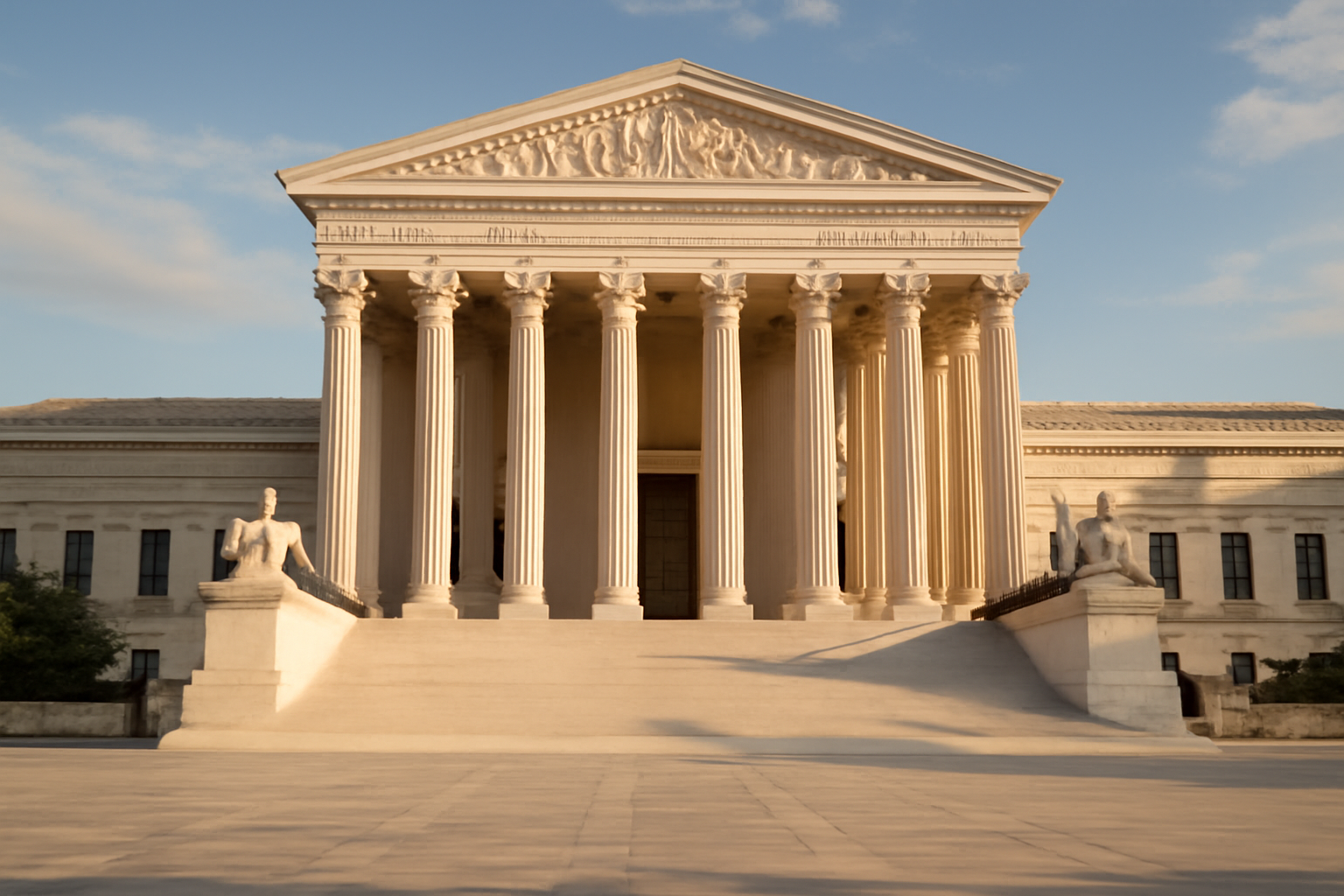
SCOTUSblog says the Supreme Court's summer recess was not much of a recess this year, and the outlet's own reporting carries that headline for a reason. The justices are supposed to step back after the term ends. Opinions stop. Oral arguments stop. The building empties out. But the docket does not close, and SCOTUSblog's framing — that the recess "wasn't" one — is a useful prompt for anyone who assumes the Court goes dark until October.
What did SCOTUSblog report about the Court's recess?
The outlet's headline is blunt: the summer break was not the quiet stretch it is billed as. SCOTUSblog has covered the Court's emergency filings for years, and the framing of this piece fits that beat. The claim is simple and worth taking at face value — the justices kept acting on the shadow docket, the informal name for the emergency applications the Court rules on outside its normal briefing-and-argument process, while the public assumed the bench was on hiatus.
That matters because the emergency docket does not come with the trappings people associate with Supreme Court decisions. There is often no full opinion. There is often no signed majority. Litigants get an order, sometimes a paragraph, sometimes nothing more than a one-line grant or denial. The public gets far less explanation than it does for a June blockbuster ruling.
What is the emergency docket, and why does it matter?
The emergency docket exists so the Court can act fast when a lower-court order needs immediate review — a stay of execution, an injunction pending appeal, a request to block a lower-court ruling before it takes effect. Speed is the point. But speed and transparency tend to trade off against each other, and that tradeoff is exactly what critics of the shadow docket have flagged for years.
A Court that issues consequential orders in August, with no argument and minimal explanation, is still a Court exercising power. SCOTUSblog's headline is a reminder that the summer calendar is not a real constraint on that power. The term ends. The influence does not.
For conservatives who spent years arguing that courts should explain themselves and stick to the text, that standard should not go on vacation just because the justices do. An order without reasoning is harder to evaluate, harder to cite, and harder to hold accountable — regardless of which administration benefits from it in a given summer.
Why does this matter for federalism and state courts?
The emergency docket is a federal story, but the underlying tension — courts acting on compressed timelines, with less public scrutiny than a normal ruling gets — shows up at the state level too. Quote Conservative's recent coverage of the Wisconsin Supreme Court's decision to hold off on suspending Judge Hannah Dugan's law license is a case in point: a state high court making a consequential call about one of its own, on its own schedule, with the public left to parse the order after the fact.
That pattern is not unique to Wisconsin, and it is not unique to the summer. It is a structural feature of how courts at every level handle matters that move faster than the normal appellate process allows. Readers looking for a primer on how federal and state judicial power divide and overlap can start with Quote Conservative's explainer on federalism, which lays out the basic lines the Constitution draws between the two systems — lines that get tested every time an emergency order lands without a full opinion behind it.
What should conservatives watch for this fall?
The new term starts soon, and the emergency docket does not pause for it. A few things worth tracking:
- Whether the Court issues signed opinions on its emergency orders or continues to rule with minimal explanation.
- Which lower-court rulings get stayed or reinstated before the new term's argument calendar is even set.
- Whether the justices who have publicly criticized the shadow docket's opacity — a debate that predates this term — say anything new about it once the Court is back in session.
- How state supreme courts, including Wisconsin's, handle their own pending matters once the federal Court's attention shifts back to argued cases.
SCOTUSblog's point stands on its own: the recess was not a recess. The Court's work never really stopped. The question for the fall is whether the public gets a fuller accounting of what it did while the calendar said otherwise.
Artiglio is A coming-soon iPhone chief of staff for briefings and drafts. Not on the App Store yet.