politics
California Voters Face Yes-or-No Judicial Retention Choices Again
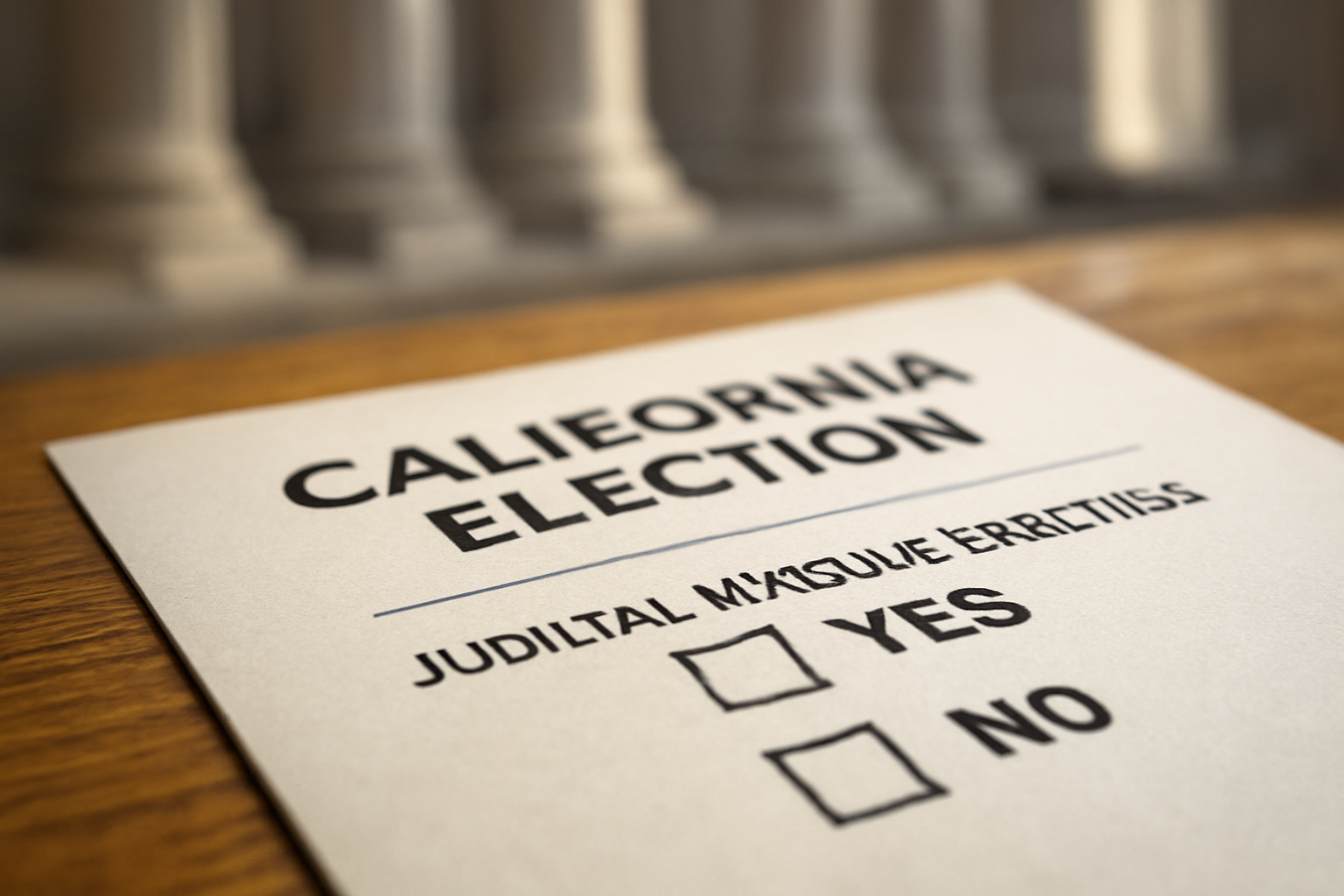
The San Francisco Chronicle has published a voter guide telling Californians how to mark the "yes or no" ballot questions covering seats on the state Supreme Court and the courts of appeal, according to the Chronicle's own account of its endorsements. The format itself is worth scrutiny before any single recommendation is.
How does California decide whether to keep a judge?
Unlike states that run contested races between rival candidates, California asks voters a binary question about sitting Supreme Court and appellate justices: retain, yes or no. There is no opposing name on the ballot, no challenger platform, and no runoff. A justice who clears a simple majority stays on the bench for another term.
What does a newspaper endorsement actually test in that system?
A "yes" or "no" guide from an editorial board is not weighing one judicial philosophy against another, because the ballot offers no alternative. It is effectively advising readers whether to ratify the status quo. That is a narrower exercise than the primary and general-election endorsements the same newspapers run for legislative or executive office, where voters choose between distinct platforms.
Does retention actually hold judges accountable?
The bar for removal through this mechanism is high; a sitting justice typically needs a sustained, organized campaign to be voted out, something that happens rarely in California. Contrast that with Wisconsin, an elected-judiciary state where a sitting justice can face formal professional discipline outside the ballot box entirely. The Wisconsin Supreme Court recently held off on suspending Judge Hannah Dugan's law license while disciplinary proceedings continue — a check that operates independently of any statewide vote. California's retention system, by design, leaves that kind of accountability almost entirely to the ballot question itself.
Why do states handle this so differently?
The divergence is not an accident; it is federalism working as intended. States retain the authority to structure their own judicial selection and removal processes, and the basic mechanics of that division of power explain why a Wisconsin disciplinary board and a California retention ballot can both be legitimate exercises of state sovereignty while producing very different accountability outcomes for voters.
What should a voter actually weigh before marking yes or no?
A newspaper's recommendation is one input, not a verdict. Voters weighing a retention question have the right to ask what a justice has actually ruled, not simply whether an editorial board prefers continuity. Blanket "yes" slates deserve the same skepticism a reader would apply to any other institutional endorsement — they reflect an editorial board's judgment, not a settled fact about judicial performance. The ballot question is simple. The reasoning behind an endorsement guide, and whether that reasoning is disclosed, should not be treated as simple by default.
mindfulAI Keyboard — An iPhone keyboard that rewrites a draft in a tone you pick. Four free AI actions a day.
Questions
What does a 'yes' or 'no' vote mean on a California judicial ballot?
It is a retention question asking whether a sitting Supreme Court or appellate justice should keep the seat for another term; there is no rival candidate on the ballot.
How does California's system differ from states with elected judges?
States like Wisconsin hold contested judicial elections and maintain separate disciplinary bodies that can act on a sitting justice's license independent of any statewide vote, as seen in the Hannah Dugan proceedings.