politics
Supreme Court's Grants Opinion Leaves Key Questions Unresolved
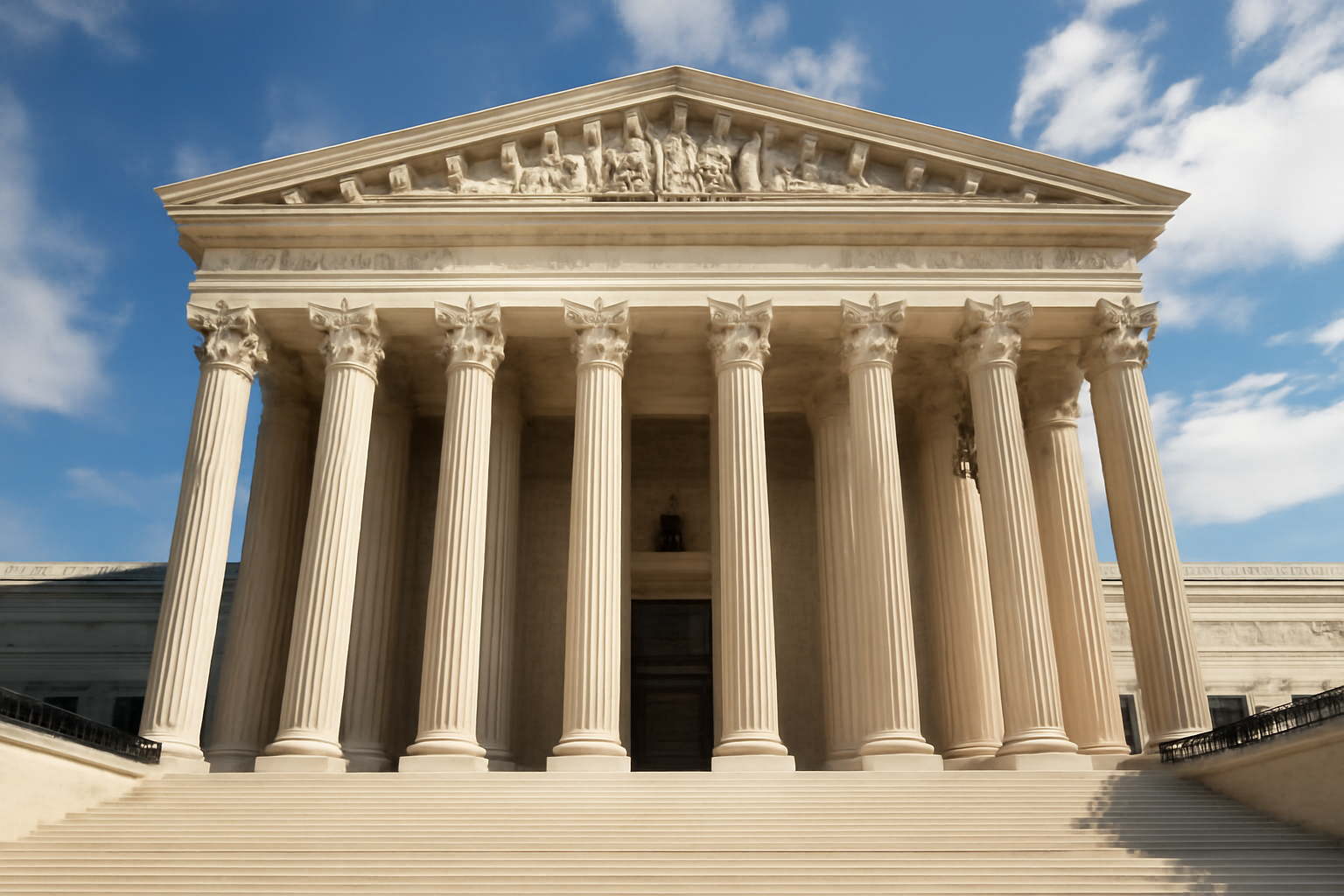
Opinion.
The Supreme Court issued a full written opinion — not just an unsigned emergency order — in a dispute over federal grant funding, and Bloomberg Law's write-up on that ruling argues the decision still left significant legal questions unanswered, according to the Bloomberg Law report. The headline on that piece — "Grants Dispute Opinion Highlights Supreme Court's Loose Ends" — makes the point plainly: committing to a full opinion does not obligate the Court to resolve every issue a case puts in front of it.
That gap matters to anyone tracking how federal money moves, or stalls, through agencies, universities, and state governments once a funding fight reaches the justices.
What makes a full opinion different from an emergency order?
Most of the Court's grant-related rulings in recent years have arrived as brief, often unsigned orders on the emergency docket — rulings that grant or deny a stay without extensive reasoning. A full opinion is different in kind. It carries precedential weight, lays out the Court's legal reasoning, and is meant to guide lower courts handling similar disputes going forward. Bloomberg Law's framing treats the issuance of a full opinion in a grants case as notable precisely because it was supposed to supply the clarity that terse emergency orders cannot.
What are the "loose ends" Bloomberg Law is pointing to?
The headline's own language — "loose ends" — is doing the legal work here. It signals that the opinion, despite its length and formality, did not close out the underlying legal dispute or answer every procedural question tied to it. For litigants and lower courts, an opinion that leaves loose ends is arguably more frustrating than an emergency order that never pretended to settle the law: it creates the expectation of finality without fully delivering it.
Why does a grants dispute test federalism principles?
Fights over federal grant money routinely sit at the intersection of executive authority, congressional appropriations, and the interests of the states and institutions that receive the funds. Quote Conservative's own explainer on the subject lays out the baseline structure: federalism divides power between a national government and the states, with federal funding conditions acting as one of the sharpest tools Washington has for shaping state and local policy without direct command, according to Quote Conservative's federalism guide. Any dispute over whether, when, or how federal grants can be withheld or redirected runs directly through that framework. A Supreme Court opinion that leaves open how far the executive branch can go in pausing or conditioning grant money is not a narrow technical ruling — it is a federalism ruling that happens to arrive in grant-dispute packaging.
Why does it matter if the Court avoids a clean resolution?
Unresolved doctrine at the Supreme Court does not stay contained to one case. Lower courts facing their own grant disputes will look to the new opinion for guidance, and if Bloomberg Law's characterization holds up, they will find a document that answers some questions while sidestepping others. That forces appellate courts and agencies to keep litigating the same underlying issues case by case rather than operating under a settled rule. For agencies deciding whether to withhold funds, and for grant recipients deciding whether to sue, ambiguity at the top of the judiciary translates into prolonged uncertainty everywhere beneath it.
What should readers watch for next?
The practical test of Bloomberg Law's "loose ends" framing will come from what lower courts do with the opinion in the months ahead. If appellate panels converge on a consistent reading despite the gaps Bloomberg Law identifies, the loose ends may prove less consequential than the headline suggests. If panels split, or if the executive branch and grant recipients return to the Supreme Court on a related question, that will confirm the opinion did not fully do the job a full, signed opinion is supposed to do. Either way, the episode is a reminder that the length and formality of a Supreme Court opinion is not, by itself, a guarantee that the underlying legal fight is over.
mindfulAI Keyboard — An iPhone keyboard that rewrites a draft in a tone you pick. Four free AI actions a day.
Questions
Why did the Supreme Court issue a full opinion instead of an emergency order in this grants dispute?
Bloomberg Law's report treats the full opinion as notable because the Court's grant-related rulings have often come as brief emergency-docket orders rather than fully reasoned opinions, according to the Bloomberg Law report.
What does it mean that the opinion left 'loose ends'?
Per the Bloomberg Law headline and framing, the opinion did not resolve every legal question raised by the underlying grants dispute, leaving issues for lower courts to work out.
How do federal grant disputes connect to federalism?
Federal grant conditions are one of the main tools Washington uses to shape state and local policy without direct command, which is why disputes over grant funding routinely raise core federalism questions, as explained in Quote Conservative's federalism guide.