politics
Supreme Court Could Curb Congress's Investigation Powers
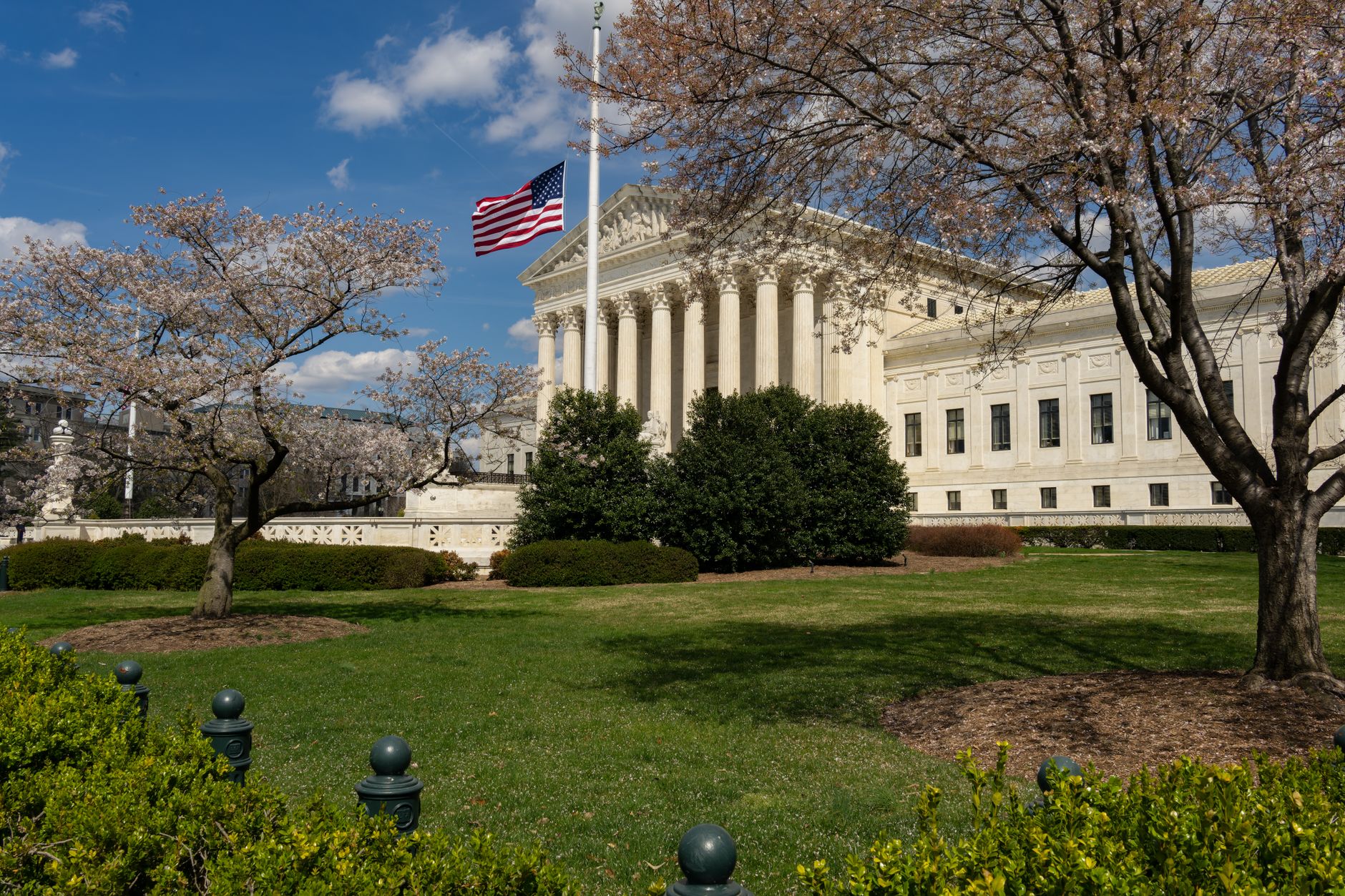
Opinion. The New York Times is asking a question this week that has no settled answer yet: whether the Supreme Court will curb Congress's ability to investigate, according to the Times' own headline on the matter, "Will the Supreme Court Thwart Congressional Investigations?". No ruling exists yet. That is precisely the point: the uncertainty itself is the story, and it is worth sitting with the numbers that frame it rather than the adjectives.
What Is The New York Times Actually Asking?
The headline frames a binary: either the justices let Congress's subpoena and investigative machinery run as it has, or they narrow it. The Times does not pretend to know the outcome — the headline is phrased as a question, not a prediction, published under the paper's own byline. That framing matters for readers trying to gauge urgency. A pending question is not a ruling. Anyone citing this story as evidence the Court has already acted is reading past what the Times itself wrote.
How Much Oversight Authority Does Congress Actually Have?
Congress's investigative power is not written out word-for-word in the Constitution's seven articles; it is inferred from the legislative function itself — the idea that a body cannot write laws it cannot study. That inference has held for roughly two centuries of American governance, which is itself a kind of data point: a near-unbroken run of institutional practice now facing a fresh test. The Times' question matters because it implicitly asks whether that long run continues unbroken or gets its first major interruption in recent memory.
What Does Federalism Have to Do With This Fight?
Quote Conservative's own explainer, "Understanding Federalism: A Concise Guide," published Sept. 17, 2026, lays out the basic architecture this dispute sits inside: power divided between federal and state governments, and within the federal government, divided again among three branches. A ruling that narrows congressional subpoena power does not just affect Congress. It shifts the balance point between the legislative and judicial branches — one of exactly three nodes in that architecture. Move one node, and the other two absorb the difference. That is not partisan commentary; it is how a three-branch system with fixed total authority has to work arithmetically.
Why Should Readers Care Before A Ruling Even Lands?
Here is the uncomfortable number for anyone impatient for resolution: zero. That is how many Supreme Court opinions on this specific question exist in the public record as of this writing, based on the sourcing available. The Times poses the question; it does not report a decision, a vote count, or even oral-argument detail in the headline reporting available here. Readers hunting for a scoreline — 6-3, 5-4, remanded, affirmed — will not find one in what has been published so far. What they will find is a signal that the question has risen to the level the paper of record considers worth asking in a headline, which is itself informative about where institutional attention is currently pointed.
That should not be dismissed as nothing. Headlines framed as open constitutional questions tend to precede, rather than follow, major shifts in how lower courts and agencies behave in the interim. Executive-branch witnesses and committee staff do not wait for a final opinion before recalibrating how aggressively they comply with or resist a subpoena. The practical effect of an unresolved question can show up in compliance rates and response times long before it shows up in a published opinion — though no such compliance data appears in the sourcing reviewed here, and none should be invented to fill the gap.
What Happens Next, And What Should Readers Watch?
The honest answer is: wait for the opinion, not the headline. The Times has flagged the question; it has not reported the answer. Readers who want to track this seriously should watch for the actual filing and the Court's own docket language, not secondary commentary that gets ahead of a ruling that has not been issued. Until then, the most defensible claim is the narrowest one: the Supreme Court has been asked, by the nation's paper of record, whether it will limit Congress's investigative reach — and as of now, that remains an open question, not a settled fact.
That narrowness is not evasion. It is the only honest position available when the underlying reporting itself is phrased as a question.
Quotags is A quote-card app first shipped in 2013. Version 2.0 is returning soon — do not install an old binary.
Questions
Has the Supreme Court already ruled on limiting congressional investigations?
No. The New York Times framed the matter as an open question in its headline, and no ruling is reflected in the available reporting as of publication.
Where does Congress's power to investigate come from?
It is inferred from the legislative function rather than spelled out explicitly, a structural reading that has guided congressional oversight practice for roughly two centuries.