news
Washington — Supreme Court Clears Voting Database for Midterms
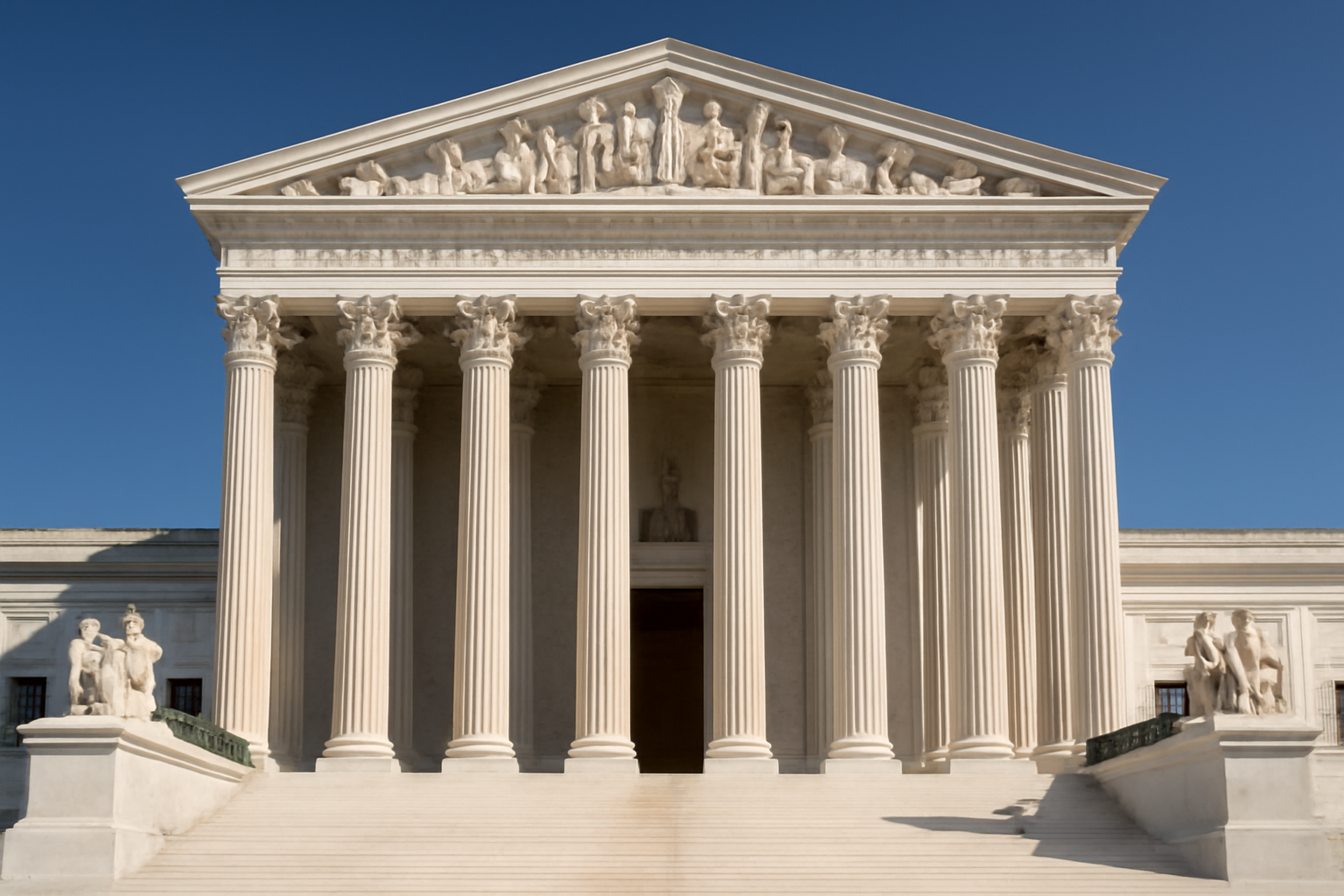
Opinion. Forbes reported this week that the Supreme Court allowed a disputed voting database to move forward, framing the decision as consequential for this fall's midterm elections, according to the Forbes report carried by Google News. The full case name, the vote count among the justices, and the operator of the database were not included in the wire copy available at publication time.
"Supreme Court Greenlights Controversial Voting Database—What That Means For The Midterms" — Forbes headline
That gap matters. A story built on a headline alone leaves voters with a conclusion but no reasoning, and no reasoning means no way to judge whether the ruling is sound.
What did Forbes actually report the Court decided?
The available reporting states only that the justices allowed a "controversial voting database" to proceed and connects that outcome to the midterms. It does not identify the plaintiffs, the state or states involved, or the constitutional theory the Court applied. Readers who want the underlying reasoning should go to the Court's own opinion once it is published, rather than take a secondhand headline as the full record.
What is actually known about the database itself?
Nothing beyond the word "database" and the modifier "controversial" appears in the material reviewed for this piece. That is not a small omission. Voter-data systems vary enormously — some match names against death records, some flag people who moved, some share information across state lines. Whether this is a state-run list-maintenance tool or something with a broader footprint changes the entire debate. Until the opinion or a fuller news account names the system, any claim about who it targets or how it works would be a guess dressed up as reporting.
Why does this touch federalism?
Election administration sits mostly with the states under the Constitution, a point laid out in Quote Conservative's explainer on federalism. Any Supreme Court ruling that lets a database operate is, at minimum, a ruling about who gets to build and use voter records — a state election office, a state legislature, or some outside entity. That is the real fight hiding behind the word "controversial." Conservatives who favor state control of elections and those who favor uniform national standards will read the same one-line headline and draw opposite conclusions, because neither side yet knows what the Court actually authorized.
What does recent friction between courts and election law show?
The country has already seen judges become part of election-adjacent legal fights this year. In Wisconsin, the state Supreme Court chose to hold off on suspending Judge Hannah Dugan's law license rather than act immediately, according to reporting from Madison. That case is not the same dispute as the voting database, but it shows a pattern worth watching: courts moving cautiously, and the public getting partial information before full rulings are released. The same caution should apply to how this voting-database story gets covered and understood before November.
What should voters watch before the midterms?
- Whether the Court's written opinion, once released, names the database and the parties.
- Whether state election officials issue guidance on what changes for voters registered in the affected state or states.
- Whether Forbes or another outlet publishes a follow-up with the case citation and vote breakdown.
- Whether either party in Congress moves to legislate on voter-data sharing in response.
Timeline
Sept. 26, 2026: Forbes headline circulates via Google News stating the Supreme Court "greenlit" a disputed voting database ahead of the midterms. No opinion text, case citation, or database name was available in that report at the time of this writing.
The honest answer to "what does this mean for the midterms" is that it is too early to say with the information currently public. A ruling that changes how voter rolls are built or shared is worth scrutiny — but scrutiny requires the actual opinion, not just a headline. Readers should treat this as a developing story and look for the primary document before drawing conclusions about turnout, purges, or ballot access in November.
Artiglio is A coming-soon iPhone chief of staff for briefings and drafts. Not on the App Store yet.