politics
Washington — Supreme Court Backs Missouri's Map for Third Time
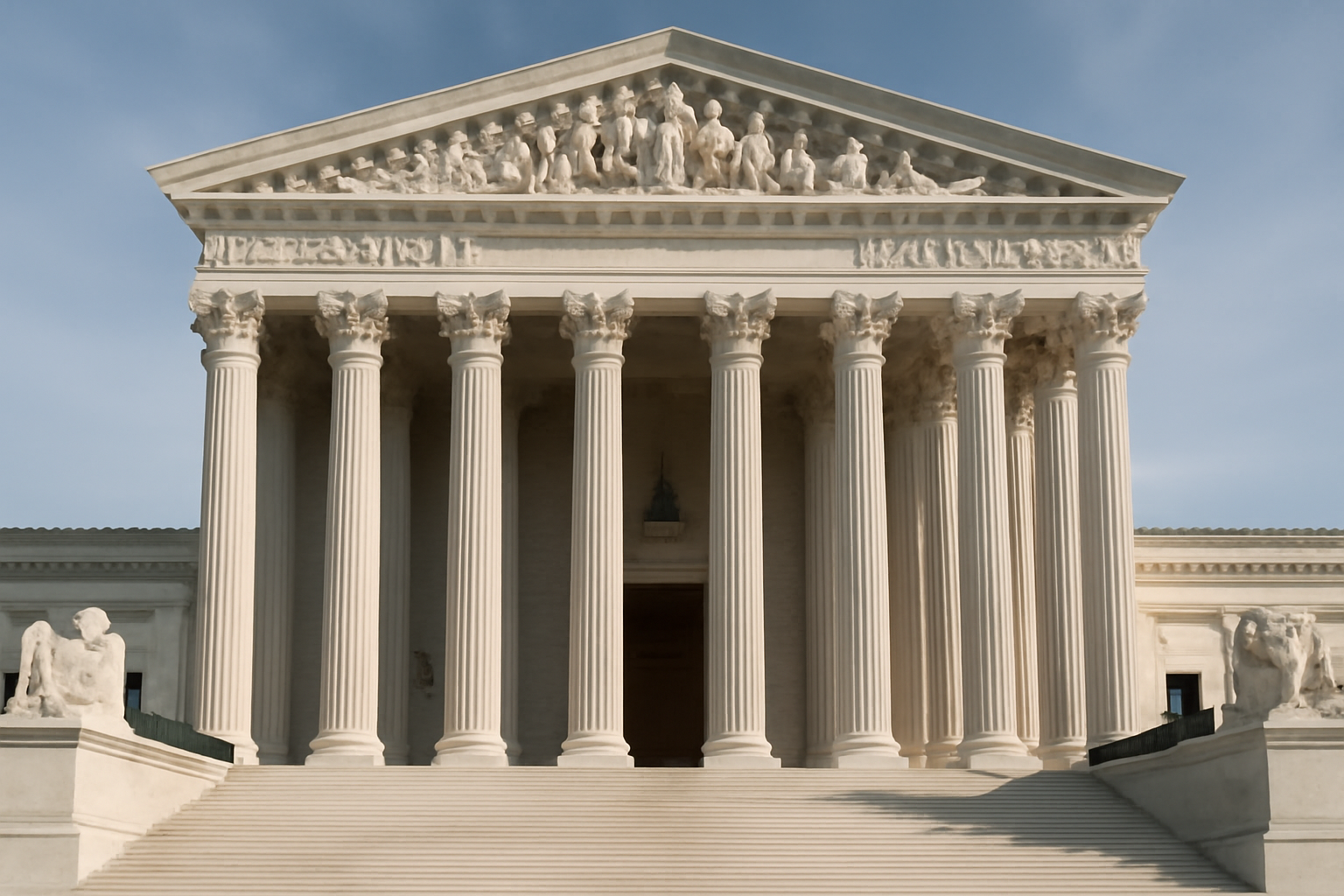
The U.S. Supreme Court has again sided with Missouri's 2022 congressional map, marking the third time the justices have let it stand rather than force the state back to the drawing board, according to KMBC's report on the ruling. For a state legislature that drew the lines, passed them into law, and defended them through multiple rounds of challenge, the outcome is simple: the map stands.
What did the Supreme Court decide about Missouri's 2022 map?
According to KMBC, the ruling is the third time the high court has come down in favor of Missouri's map as drawn in 2022. The outlet's headline states plainly: "US Supreme Court rules in favor of Missouri's 2022 map for third time." That repetition is the story. A map that survives one round of litigation might be luck. A map that survives three is a signal that the challengers' legal theory has not found traction with the justices, no matter how many times it is repackaged and refiled.
"US Supreme Court rules in favor of Missouri's 2022 map for third time." — KMBC
The available reporting does not lay out the specific plaintiffs, the exact date of the order, or the vote breakdown among the justices, and this piece will not guess at details that are not in the record. What is clear from the headline itself is the pattern: three separate rulings, one outcome.
Why has this same map reached the justices three times?
Redistricting fights rarely end with a single lower-court decision. Maps get challenged, upheld, appealed, and challenged again on a slightly different theory, often stretching a single election cycle's worth of litigation across years. That Missouri's map has now drawn three rulings from the nation's highest court, per KMBC, fits a familiar pattern in modern redistricting fights: opponents of a map do not need to win on the merits if they can keep a map tied up long enough to affect who campaigns where, who raises money, and who shows up to vote under uncertain lines.
The Supreme Court's repeated refusal to disturb Missouri's map is itself an answer to that strategy. Litigation-by-attrition works only if courts eventually change their minds. Three rulings the same direction tells state legislators, and litigants everywhere, that this map is not going to fall on a fourth try either.
What does the repeat ruling say about judicial deference to state legislatures?
This is where the federalism question sits. The U.S. Constitution assigns the drawing of congressional districts to state legislatures in the first instance, and courts have historically been reluctant to override that judgment absent a clear constitutional violation. A concise explainer on federalism lays out why that division of authority exists: state legislatures, not federal courts, are supposed to be the primary venue for line-drawing decisions, subject to real but limited judicial review.
A map that clears the Supreme Court three times is a map that has been tested against that limited standard three separate times and passed each one. Critics of Missouri's lines are free to argue the map dilutes votes or was drawn for partisan advantage — those are legitimate points to raise in the public debate and in future elections. But the judiciary has now said, repeatedly, that the map as drawn does not cross the legal line that would justify a federal court redrawing it for the legislature.
What should Missouri voters and other states take from this?
The practical lesson for Missouri is that the 2022 map is the map for the foreseeable future — voters know their districts, candidates know their turf, and the state's congressional elections proceed under settled lines rather than a moving target. For other states watching from the sidelines, the lesson is about the limits of repeat litigation: filing a fourth or fifth challenge on a map the Supreme Court has already blessed three times is a long-shot bet, not a strategy.
That does not mean redistricting disputes are over nationally. Other states have their own map fights working through lower courts, and those will be decided on their own facts. But Missouri's case, as KMBC reports it, stands as a reminder that when a legislature draws a map within its constitutional authority, the courts' job is to check it against the law — not to keep reopening the question until a different answer arrives.
Questions
How many times has the Supreme Court ruled on Missouri's 2022 map?
Three times, according to KMBC's reporting on the case.
Who draws congressional maps under the U.S. Constitution?
State legislatures have primary authority to draw congressional districts, a federalism principle explained in Quote Conservative's guide to federalism.