politics
What We Know About the Supreme Court's Pro-Trump Ruling and 2026
Opinion
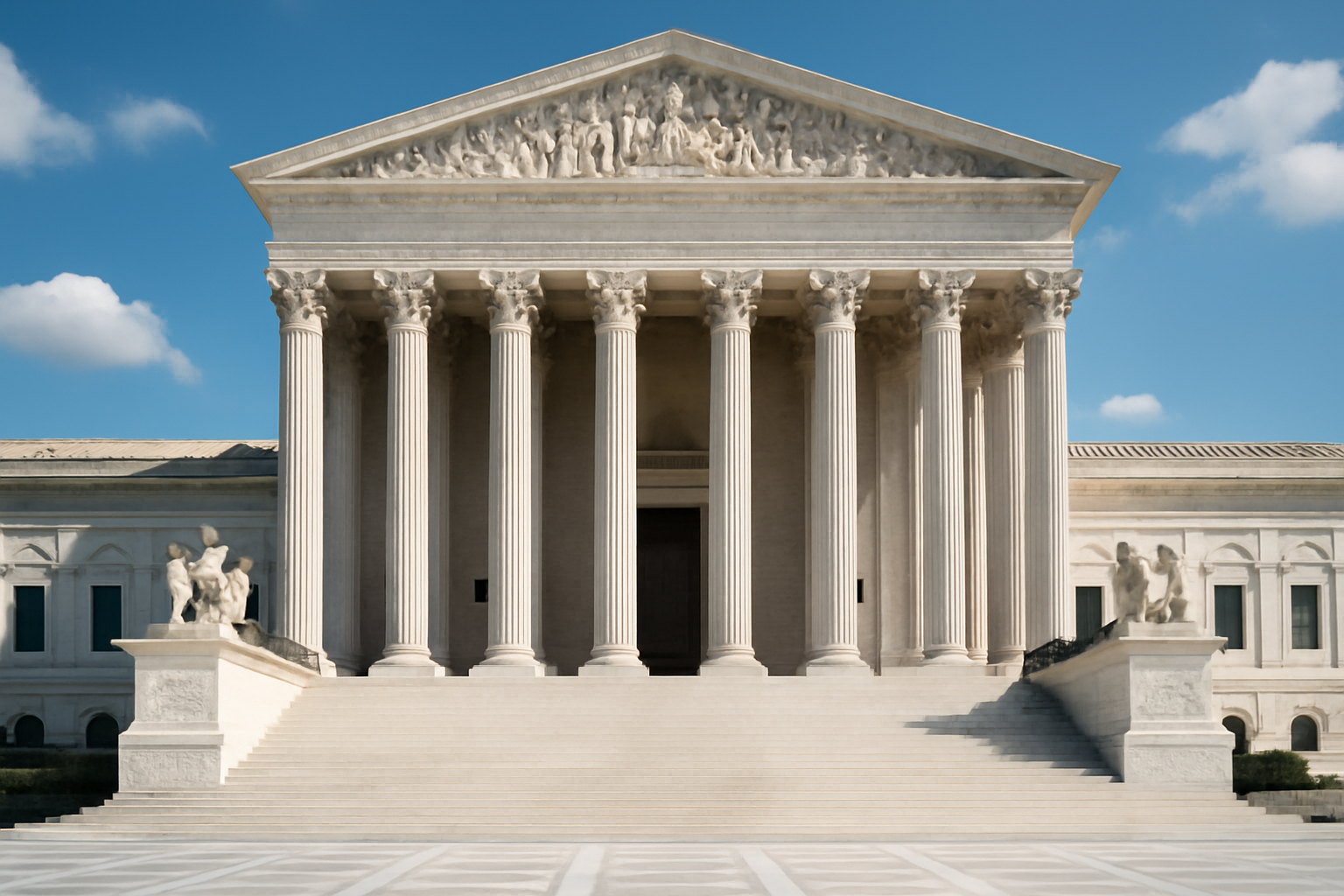
A U.S. Supreme Court ruling favorable to President Trump will not change the outcome of the 2026 midterms, according to Votebeat, the nonprofit outlet that covers election administration nationwide. The outlet frames the decision as a legal win for the administration with little practical weight at the ballot box.
Votebeat's reporting does not detail the underlying case beyond describing the outcome as favorable to Trump. That gap matters. This analysis does not fill it with guesses.
What Did the Supreme Court Rule, and Why Is It Called Pro-Trump?
Votebeat's own headline calls this the "latest" pro-Trump ruling from the court, implying a pattern rather than an isolated case. The public reporting reviewed for this piece does not specify the case name, the vote count, or the legal question decided. Any conclusion about how far the ruling reaches should wait for the full text of the opinion, not the headline describing it.
Why Does Votebeat Say the Ruling Won't Reshape 2026?
The outlet's headline supplies its own thesis: the ruling is "unlikely to affect the 2026 election." That claim tracks a basic structural fact about American government. A ruling on federal executive authority does not rewrite the codes that state legislatures and local clerks use to run elections. Winning a case in Washington does not hand a president control over ballots printed in Ohio or poll workers trained in Arizona.
Who Actually Runs Elections in the United States?
The answer is not Washington. It is states, counties, and cities. Quote Conservative's own explainer on federalism lays out the constitutional logic: powers not given to the federal government are reserved to the states, and election administration sits inside that reserved space. Secretaries of state certify results. County clerks run precincts. State legislatures write the rules for who votes and how.
By the numbers:
- 9 — justices on the U.S. Supreme Court
- 50 — states, each running its own election system
- 2026 — the year of the next federal midterm election
That decentralization is the mechanical reason a single Supreme Court ruling favoring Trump does not automatically move a governor's race in Wisconsin or a House seat in Georgia. The court can settle a federal legal question. It cannot rewrite fifty separate election codes in one opinion.
What Other Election Disputes Are Playing Out in 2026?
State-level fights continue on their own tracks, independent of what the Supreme Court does with federal executive power. In Wisconsin, the state supreme court has held off on suspending Milwaukee Judge Hannah Dugan's law license, a case tied to her arrest over an immigration enforcement dispute, not to ballot access or vote counting. Separately, HTT News reports that election fraud cases are rising amid integrity concerns in courts across the country.
Neither dispute turns on the Supreme Court ruling Votebeat is describing. That is the point. Election law heading into 2026 will be shaped by dozens of state rulings, state legislative sessions, and local administrative decisions, not by one opinion out of Washington, however favorable to the president it reads.
What Do Key Election Terms Mean?
- Federalism: the constitutional division of power between the national government and the states, which gives states primary authority over how they run elections.
- Election administration: the day-to-day work of running elections — registering voters, printing ballots, staffing polls, certifying results — handled almost entirely by state and local officials.
- Midterm election: a federal election held partway through a presidential term, in this case 2026, deciding all U.S. House seats and roughly a third of the Senate.
The Take
Treat headlines claiming a single Supreme Court ruling will "affect" or "not affect" an election with skepticism in either direction. The system was built to make centralized swings hard. A ruling favorable to a president is real news. It is not, by itself, election news. Votebeat's caution here reads as the correct instinct: separate the legal win from the electoral consequence, because the Constitution built a wall between the two, and no single opinion tears it down.
Questions
Does the Supreme Court ruling change how the 2026 midterms are run?
No. Votebeat reports the ruling is unlikely to affect the 2026 election because states and localities, not the federal courts, administer elections.
Who has authority over how U.S. elections are run?
States, counties, and cities run American elections under federalism, with secretaries of state and local clerks setting and enforcing the rules.