news
First Liberty Institute Explains How the Supreme Court Works
Opinion
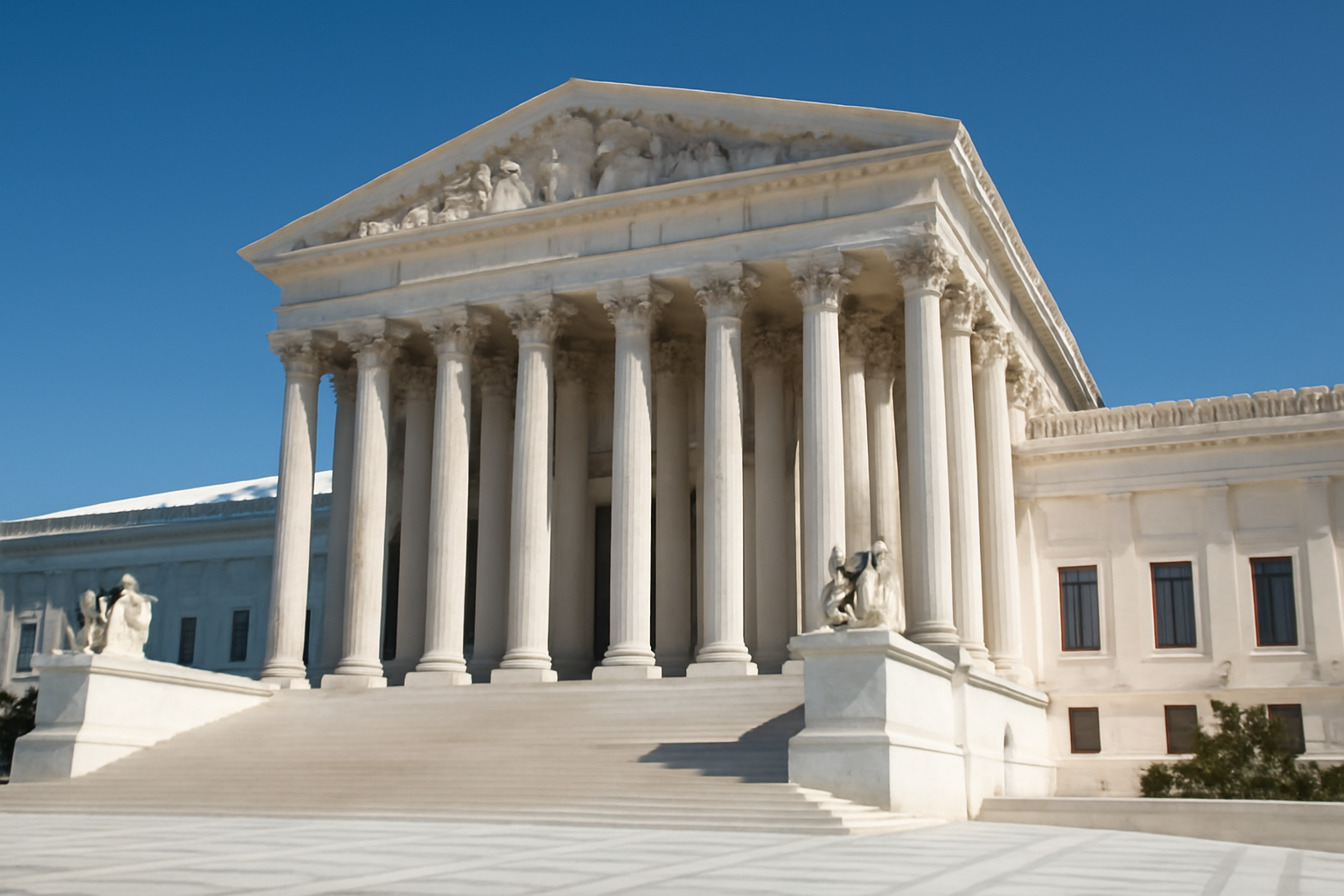
First Liberty Institute, a legal advocacy group that regularly litigates religious-liberty cases before federal courts, has published an explainer titled "How the Supreme Court Works," carried by Google News. That a legal nonprofit felt the need to publish a basics-level guide to the nation's highest court says something about where the public conversation stands. The institution that resolves the country's biggest constitutional fights remains, for most Americans, a black box.
The structural facts are not in dispute. Article III of the Constitution establishes the Supreme Court and grants justices life tenure, a design meant to insulate rulings from short-term political pressure. The Court seats nine justices — one Chief Justice and eight Associate Justices — each nominated by the president and confirmed by the Senate. Those two figures, nine seats and lifetime terms, are the starting point for any honest explanation of how the Court operates, and they are also the two facts most frequently missing from casual political commentary about the institution.
Why does an explainer like this matter right now
Civic-literacy gaps are not new, but they carry more weight when state and federal courts are openly diverging on hot-button cases. A Wisconsin Supreme Court dispute over suspending a judge's law license, reported by this outlet, is one example of a state judiciary making consequential calls that ripple into national debate. Readers who do not understand the baseline mechanics of a court — how a case reaches it, who decides, what binds whom — are poorly positioned to evaluate whether a given ruling is ordinary judicial process or something more unusual.
How does a case actually reach the Supreme Court
The Court is overwhelmingly an appellate body. It does not investigate facts or hold trials in the way a district court does. Litigants ask the Court to review a decision already made by a lower federal court or the highest court of a state, and the justices choose which petitions to hear through a discretionary process. The vast majority of petitions are denied without explanation, meaning the lower court's ruling stands. That selectivity is itself a form of power: the Court shapes the law as much by what it declines to review as by what it decides.
Why does the nine-justice number keep coming up in political fights
Every time a seat opens, the confirmation fight becomes a proxy war over the Court's future direction, because a lifetime appointment on a nine-member body can shift outcomes for decades. That stake is precisely why the number nine, fixed by federal statute rather than the Constitution itself, periodically resurfaces in proposals to expand or shrink the bench. Explainers that walk through the plain mechanics — nomination, confirmation, tenure — are a useful corrective to the assumption that the Court's size or composition is immutable.
How does federalism shape what the Supreme Court can and cannot do
The Supreme Court's authority exists alongside, not above, the authority of state courts on matters of state law. This outlet's guide to federalism lays out the basic division: federal courts interpret federal law and the Constitution, while state supreme courts have the final word on their own state constitutions and statutes, absent a federal question. That distinction matters for readers trying to sort out why a state-level controversy, like the Wisconsin judge's license dispute, does not automatically become a Supreme Court matter.
What to watch
- Whether First Liberty Institute's explainer leads to follow-up material on specific pending cases, or stays limited to structural civics.
- How confirmation fights over any future vacancy reference the nine-seat baseline versus proposals to alter it.
- Whether state-court disputes, like the Wisconsin license matter, generate renewed public interest in the federal-state court divide.
- Whether civic-education groups across the ideological spectrum publish comparable explainers, a sign the literacy gap is being treated as nonpartisan.
The case for more material like First Liberty's explainer is not ideological. A public that cannot describe how a case reaches the Supreme Court, how many justices sit on it, or why federal and state courts have separate lanes is a public poorly equipped to judge whether any particular ruling — or any particular outrage about a ruling — is justified. That is the argument for plain-English civics, regardless of which side of a case one ultimately favors.
Questions
How many justices sit on the Supreme Court?
The Supreme Court has nine seats: one Chief Justice and eight Associate Justices, established under Article III of the Constitution.
How does a case get to the Supreme Court?
Most cases arrive as petitions asking the Court to review a ruling from a lower federal court or a state's highest court; the justices choose which petitions to accept.
Do state courts and the Supreme Court have the same authority?
No. State supreme courts have final say on questions of state law and their own state constitutions, while the U.S. Supreme Court's authority is tied to federal law and the U.S. Constitution.