politics
UT President's Office Booked Ben Shapiro Venue, Records Show
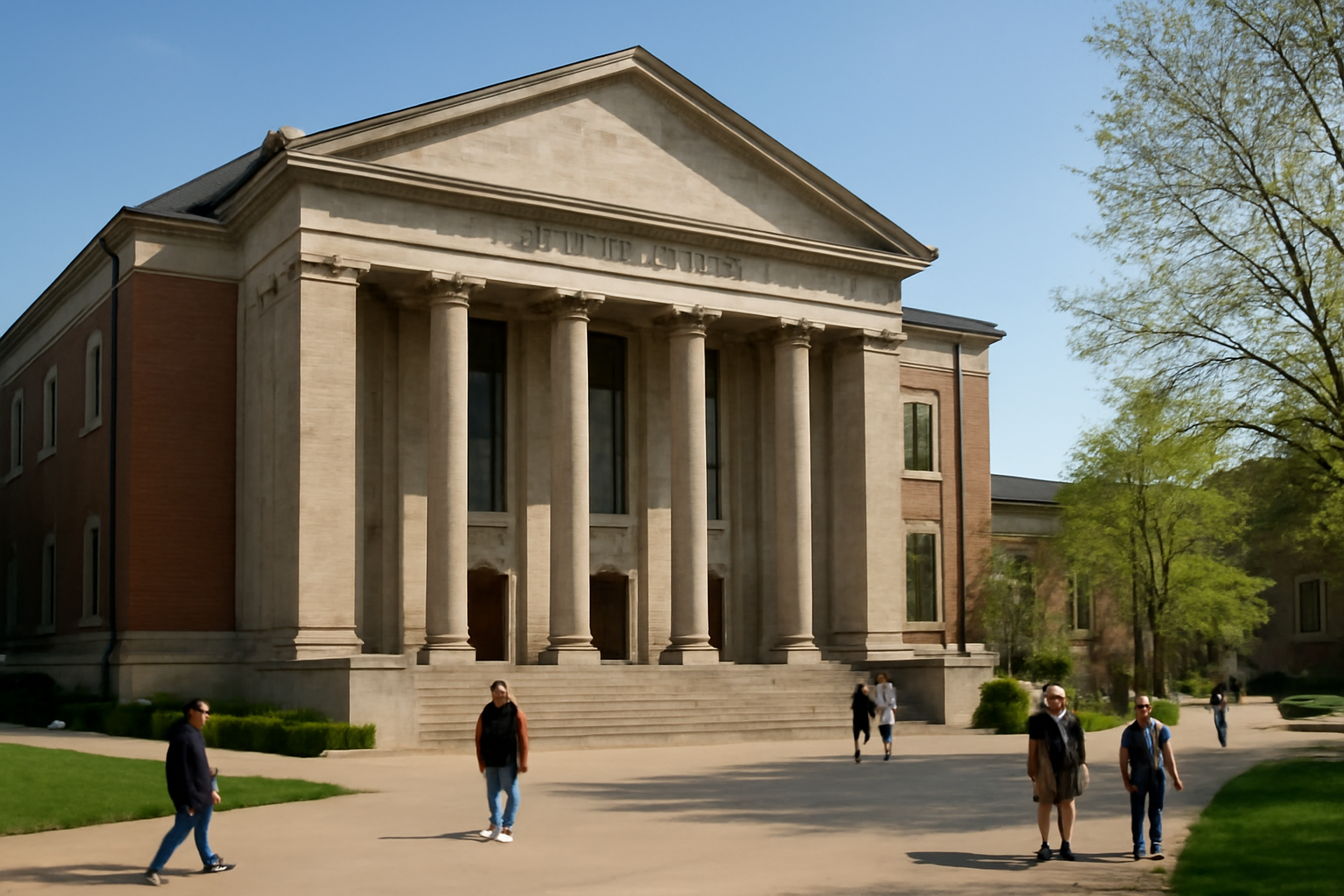
Records show the University of Texas president's office, not a student organization, reserved the campus venue used for a Ben Shapiro appearance, the Austin American-Statesman reports. The newspaper's account identifies the booking as coming from the top of the university's administration rather than from a registered student group, the arrangement that typically governs outside speakers on public university campuses.
What do the records actually show?
The Statesman's reporting, based on records it reviewed, ties the venue reservation directly to the president's office. The paper does not report the booking originating from a student political organization, which is the standard channel for outside speakers at most public universities, including UT's own. That distinction is the entire story here. Every other detail — dates, costs, the specific building — belongs to the Statesman's full account, linked above, and this piece does not restate figures the paper has not published.
Why does it matter who made the reservation?
A student group booking a controversial speaker is a routine campus event. A president's office doing the same thing is not. University administrations generally try to stay above the fray on which speakers get platforms, leaving that judgment to students and faculty sponsors. When the administrative wing of a public university — the office that answers to a board of regents and, ultimately, taxpayers — handles the logistics for a speaker as polarizing as Shapiro, it invites a fair question: was this a routine facilities matter, or a decision with the president's imprimatur attached?
That question matters regardless of one's opinion of Shapiro. If a university president's office would reserve space this way for a conservative commentator, the same office should be expected to do so for a left-leaning one under comparable circumstances. Consistency, not ideology, is the test a public institution has to pass.
How does this fit the broader fight over campus speech?
Public universities have spent years defending themselves against charges that administrative bureaucracies quietly tilt the playing field for outside speakers — sometimes by imposing security fees that student groups cannot afford, sometimes by routing bookings through offices with more discretion than a student club has. Conservative students and faculty have argued for years that the friction runs one direction. Administrators have countered that security and logistics decisions are made on neutral, content-blind grounds tied to venue capacity and safety, not politics.
This record does not resolve that argument. What it does is put a concrete data point into a debate that is too often fought with anecdote. A president's office handling a Shapiro booking is now a documented fact, not a talking point. That is precisely the kind of detail public-records requests exist to surface, and it is worth taking at face value rather than overreading into a scandal the Statesman's own reporting has not alleged.
What the records establish — and what they don't
- Confirmed: The UT president's office reserved the venue for Shapiro's appearance, per records the Statesman reviewed.
- Not established in this reporting: Any claim that the booking was irregular, improper, or inconsistent with how the office has handled other speakers. The Statesman's piece is a records story, not an ethics finding.
Readers should resist the urge to turn a single disclosed fact into a conspiracy. The honest reading is narrower: the public now knows who made the reservation. What remains unknown — whether this is standard practice for high-profile speakers across the political spectrum — is exactly the follow-up question a public-records requester should ask next.
Does this touch on broader questions of institutional authority?
Public universities sit at an awkward intersection of state funding, federal civil-rights law, and campus self-governance — the same layered authority that defines American federalism more broadly, as outlined in Quote Conservative's primer on federalism. A state-funded institution's president's office does not operate in a vacuum; it answers to a governor-appointed board and, indirectly, to a state legislature that controls its budget. That layered accountability is why a records request about a single speaker booking can carry weight beyond the event itself.
What should readers watch for next?
The open question is whether UT's president's office handles bookings for speakers across the ideological spectrum the same way. Until the Statesman or another outlet obtains comparable records for other high-profile events, the fairest conclusion is the simplest one: the records confirm who reserved the room. They do not, on their own, confirm favoritism. That distinction should matter to readers on every side of the Shapiro debate.
Artiglio is A coming-soon iPhone chief of staff for briefings and drafts. Not on the App Store yet.
Questions
Who reserved the venue for Ben Shapiro's appearance at UT?
Records reviewed by the Austin American-Statesman show the University of Texas president's office made the venue reservation, rather than a student organization.
Does the report allege wrongdoing by UT's administration?
No. The Statesman's reporting establishes who booked the venue; it does not allege the booking was improper or inconsistent with past practice.