politics
The New York Times Says the Supreme Court Is Too Powerful. Is It?
Opinion.
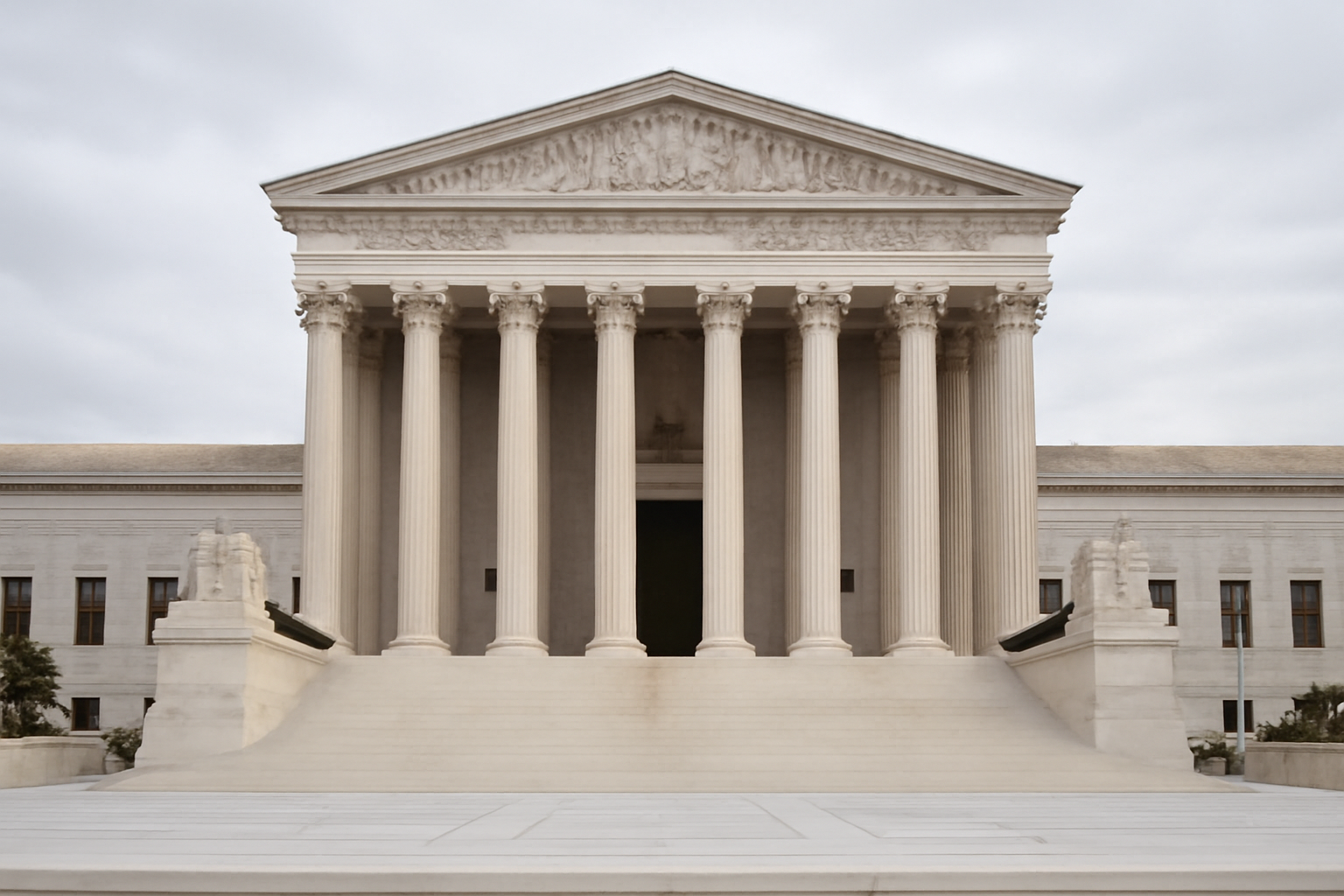
The New York Times published an opinion piece this week under the headline "The Supreme Court Has Grown Too Powerful. This Is How to Rein It In." The title alone stakes out the argument: a court seated for life, insulated from elections, has accumulated too much authority over American life, and something has to give.
That is a claim worth taking seriously, not waving away. It is also a claim worth testing against what the Constitution already does, and against how judicial accountability actually plays out closer to the ground.
What Is the Times Actually Objecting To?
The headline itself is the only text available for direct quotation here: "The Supreme Court Has Grown Too Powerful. This Is How to Rein It In." Nine lifetime appointees deciding questions that touch abortion, guns, immigration, and the regulatory state is, by design, how Article III courts were built — to be countermajoritarian on constitutional questions. Whether that design has tipped into something the framers would not recognize is exactly the debate the Times is picking. Readers should go to the source and read the Times' own reasoning in full before accepting or rejecting it secondhand.
Does the Constitution Already Have an Answer?
It is worth remembering that the Supreme Court does not operate in a vacuum. As Quote Conservative's own explainer on the subject lays out, the American system was built on a division of power between federal and state governments precisely so that no single body — including the judiciary — could become the only check in the room. See Understanding Federalism: A Concise Guide. Congress controls the Court's budget, can alter its appellate jurisdiction under Article III, and confirms every justice. States retain their own courts, their own constitutions, and their own disciplinary systems for judges and lawyers. The federal Supreme Court's power is real, but it is not unaccompanied.
What Does Judicial Accountability Look Like in Practice?
A useful contrast sits one level down from the Supreme Court itself. In Madison, the Wisconsin Supreme Court recently declined to immediately suspend the law license of Milwaukee County Circuit Judge Hannah Dugan, who faces federal obstruction allegations tied to an immigration enforcement encounter in her courtroom, according to Quote Conservative's reporting. That case is not about the U.S. Supreme Court, and it does not resolve the Times' argument. But it illustrates a point the national debate tends to skip: state courts already have mechanisms — bar discipline, state judicial conduct boards, and their own supreme courts — to check judges without waiting on Washington to rewrite Article III.
What's the Timeline Here?
- Sept. 17, 2026 — Wisconsin's Supreme Court holds off on suspending Judge Dugan's law license pending further proceedings.
- Sept. 17, 2026 — Quote Conservative publishes its federalism explainer, outlining the constitutional division of power between federal and state authority.
- Oct. 13, 2026 — The New York Times publishes its opinion argument that the U.S. Supreme Court has grown too powerful and needs structural reform.
Is "Too Powerful" the Right Diagnosis?
The harder question the Times' headline invites is whether the problem is the Court's power or the public's discomfort with how that power has been used lately. Those are different diagnoses with different cures. If the issue is constitutional structure, the remedy runs through Congress and the amendment process — slow, deliberately so. If the issue is dissatisfaction with specific rulings, that is a political argument dressed in structural language, and it deserves to be argued as one. Readers deciding which version they are being sold should read the Times' full case rather than the headline alone, and weigh it against the checks — federal and state — that already exist.
What to Watch
- Whether the Times op-ed specifies concrete mechanisms (jurisdiction limits, term lengths, ethics enforcement) beyond the headline's framing, once the full text is reviewed.
- How the Wisconsin Supreme Court ultimately rules on Judge Dugan's law license, as a live example of state-level judicial discipline in action.
- Whether Congress takes up any Article III jurisdiction-stripping or ethics legislation this term, which would be the actual test of whether "reining in" the Court moves from opinion page to statute book.
Questions
What is the New York Times opinion piece arguing?
Its headline states that the Supreme Court has grown too powerful and proposes ways to rein it in, though the specific mechanisms require reading the full piece at the source link.
Does the U.S. Constitution already limit the Supreme Court's power?
Yes — Congress controls the Court's budget and appellate jurisdiction under Article III and confirms justices, while federalism preserves separate state court systems, as outlined in Quote Conservative's federalism guide.
Is the Wisconsin Supreme Court's Hannah Dugan case related to the U.S. Supreme Court debate?
Not directly — it's a state-level judicial license matter — but it illustrates that mechanisms for checking judges already exist outside the federal Supreme Court.