politics
New York Times Opinion Page Renews Supreme Court Reform Push
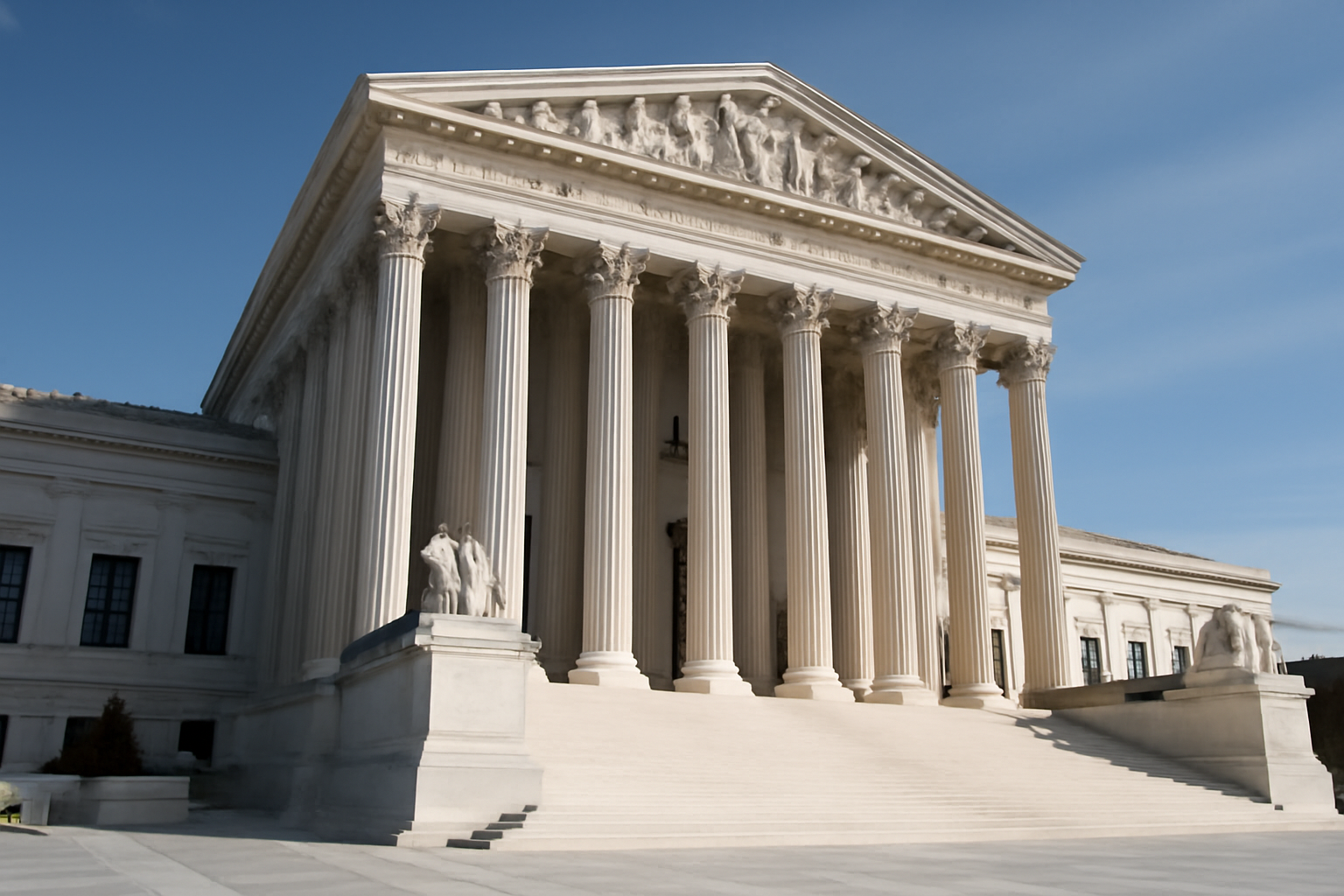
Opinion.
The New York Times' opinion section published a piece titled "Ways to Reform the Supreme Court," according to the outlet's own listing, the latest entry in a debate that resurfaces almost every term the Court hands down a decision that one side or the other dislikes. The headline alone makes the editorial's intent plain: the paper's opinion desk believes the current Court needs changing. What specific mechanisms the piece endorses is a matter for readers to judge directly from the Times' own text, since the full argument sits behind the outlet's opinion section rather than in wire excerpts.
Why does the Supreme Court reform debate keep coming back?
The pattern is familiar. A ruling lands that reshapes abortion law, gun rights, administrative power, or election procedure, and within days opinion pages on the losing side are calling for structural change — more justices, fixed terms, mandatory retirement ages, or binding ethics rules. The Times' latest entry fits that cadence. What makes the current cycle distinct is not the argument itself but how often it repeats with no legislative movement behind it: proposals to add seats or impose term limits require either a constitutional amendment or an act of Congress that the sitting majority has shown no appetite to pass.
What do reform advocates argue, and what do critics counter?
In the broader public debate this editorial joins, advocates for change typically point to lifetime tenure as a structural flaw that lets a handful of justices shape law for decades beyond any single presidential term, and to recent ethics controversies as evidence the Court polices itself too loosely. Critics counter that lifetime appointments were designed deliberately, in Article III of the Constitution, to insulate judges from political pressure — and that proposals to expand the bench or impose rotating panels would simply let whichever party controls Congress and the presidency rewrite the Court's membership to fit its own agenda, undermining the independence the design was meant to protect. Neither side disputes that the Court's public approval has been a live political issue; they disagree sharply on whether changing its structure fixes that or just moves the fight to a different branch.
How is judicial accountability playing out below the Supreme Court level?
While national opinion pages argue over the Supreme Court's structure, state courts are already testing how far judicial accountability extends. In Wisconsin, the state's highest court recently held off on suspending the law license of Milwaukee Judge Hannah Dugan, a case that turns on how much authority a state judiciary has to discipline its own members versus deferring to separate proceedings. That dispute is a small-scale version of the same question the Times' editorial raises at the federal level: who gets to check a judge, and through what process, without turning the judiciary into another arena for partisan score-settling.
Why does federalism complicate any Supreme Court reform plan?
Any serious reform conversation has to reckon with federalism — the constitutional division of power between the federal government and the states, explained in detail in Quote Conservative's guide to the concept. Supreme Court reform proposals aimed at Washington do nothing to change how state supreme courts, like Wisconsin's, handle their own judicial discipline and election disputes. A reader focused only on the U.S. Supreme Court risks missing that most judicial-accountability fights Americans actually experience — judge suspensions, state election rulings, licensing disputes — happen at the state level, under rules Congress cannot touch and that an amendment to federal court structure would not reach.
What should readers watch for next?
- Whether the Times' editorial or similar opinion pieces translate into an actual bill introduced in Congress, versus remaining commentary.
- Any movement on judicial ethics rules the Supreme Court itself might adopt voluntarily, which would blunt one of the reform camp's core arguments.
- How the Wisconsin Supreme Court ultimately rules on Judge Dugan's license, since state-level precedent on judicial discipline often gets cited in federal arguments.
- Whether any 2026 or 2027 campaign makes court-structure reform a named plank, which would be the clearest sign the idea has moved from op-ed pages toward actual legislative traction.
The Times is entitled to its view, and its opinion section has published one more entry in an argument that has outlasted several Congresses without changing a single justice's seat. Whether that record continues probably says more about separation-of-powers math than about any single editorial's persuasive power.