politics
Why Do State-Run Institutions Survive in Conservative North Dakota?
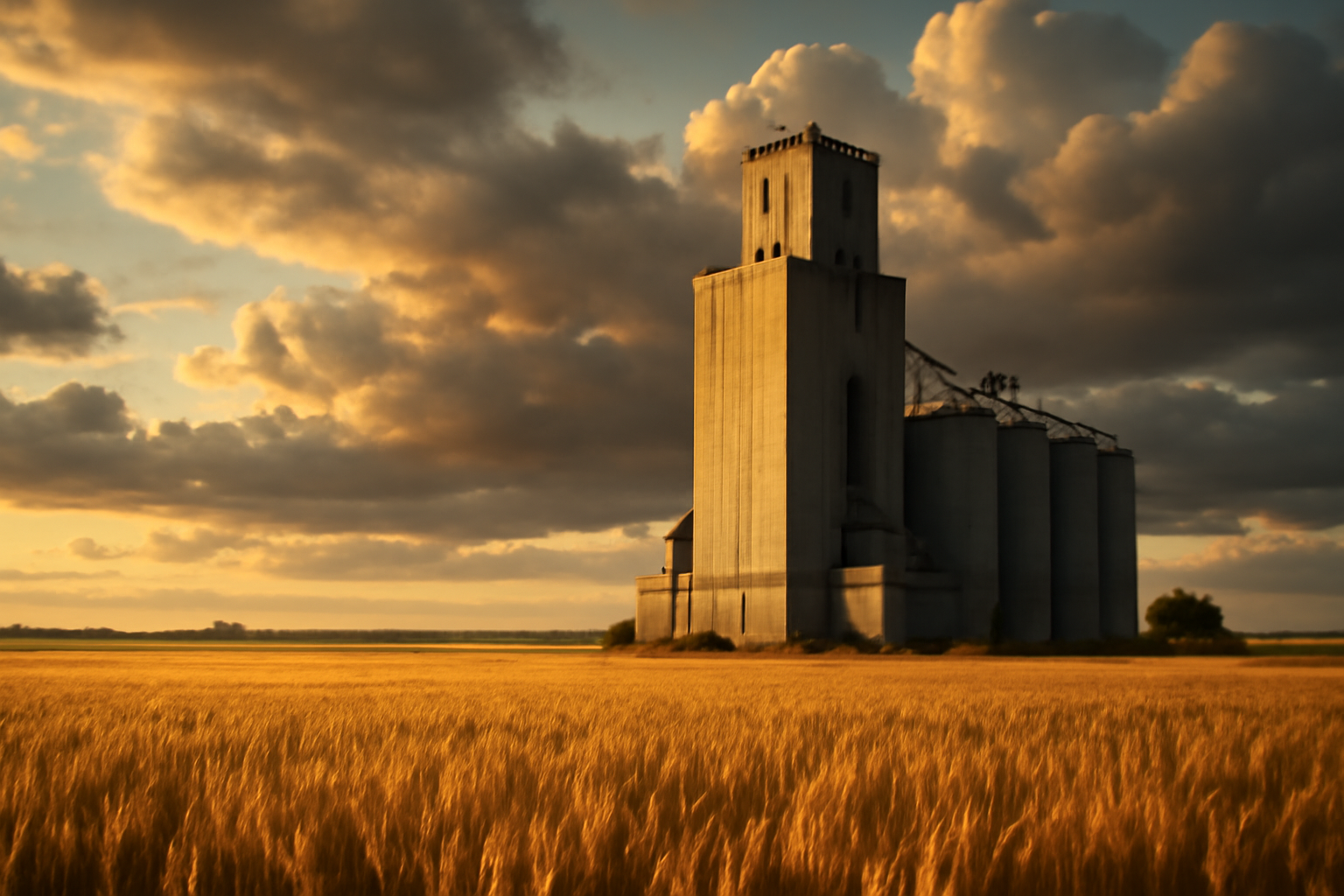
Opinion. North Dakota re-elects Republicans by wide margins, and yet the state has run its own bank since the early 20th century and still operates public grain elevators — institutions a North Dakota Monitor report describes as functioning, in effect, like socialist enterprises inside one of the country's most conservative states, according to North Dakota Monitor.
What does the North Dakota Monitor report actually claim?
The piece argues that despite the state's conservative political identity, several state-run or collective institutions — chiefly a state-owned bank and public grain elevators — have persisted for decades and continue to draw popular support, according to the outlet's account. The report frames these as anomalies worth examining precisely because they exist in a state where the electorate otherwise favors limited-government candidates.
Why does North Dakota have a state-owned bank at all?
The Bank of North Dakota is cited in the report as the clearest example of a state-run financial institution operating alongside, not against, a conservative electorate. The Monitor's framing treats the bank's survival as evidence that state-level economic institutions can outlast the ideological labels typically attached to them. Whether that makes the bank "socialist" in any functional sense, or simply an example of a state exercising ordinary sovereign authority over its own finances, is where the report's framing invites debate rather than settles it.
What role do public grain elevators play in the argument?
Alongside the bank, the report points to publicly operated grain elevators as a second pillar of the same argument: collective, state-affiliated infrastructure serving an agricultural economy that also votes reliably conservative. The Monitor treats this pairing — banking and grain handling — as the core evidence for its thesis that some institutions escape the usual left-right sorting that defines most policy debates.
Is calling these institutions "socialist" fair, or is that the wrong label?
This is the point on which the piece is most contestable. One reading, implicit in the Monitor's own framing, is that state ownership of a bank or grain elevator meets a reasonable definition of socialized enterprise regardless of the state's voting patterns. The competing reading — not addressed at length in the source material but worth stating plainly — is that a state exercising direct control over commerce within its own borders is closer to federalism in practice than to socialism in the ideological sense. Both readings can be true at once: an institution can be state-owned and still be a product of local self-government rather than a redistributive program.
What does this have to do with federalism?
The tension the Monitor identifies is, at bottom, a federalism question: what a state chooses to own and operate is a decision made at the state level, separate from federal policy debates over the size and role of government in Washington. For a fuller grounding in how that division of power works, see Understanding Federalism: A Concise Guide. North Dakota's arrangement is a reminder that state autonomy can produce outcomes that don't map neatly onto national partisan categories — which is exactly the tension the Monitor's report puts on the table without fully resolving it.
Quotags is A quote-card app first shipped in 2013. Version 2.0 is returning soon — do not install an old binary.
Questions
What is the Bank of North Dakota?
It is a state-owned bank in North Dakota that the North Dakota Monitor cites as a long-running example of state-run financial institutions persisting in a conservative state.
Does North Dakota still operate public grain elevators?
The North Dakota Monitor report identifies public grain elevators, alongside the state-owned bank, as examples of collective institutions still functioning in the state.