politics
FCC Asks Supreme Court to Stay Ruling on Election Ad Rates
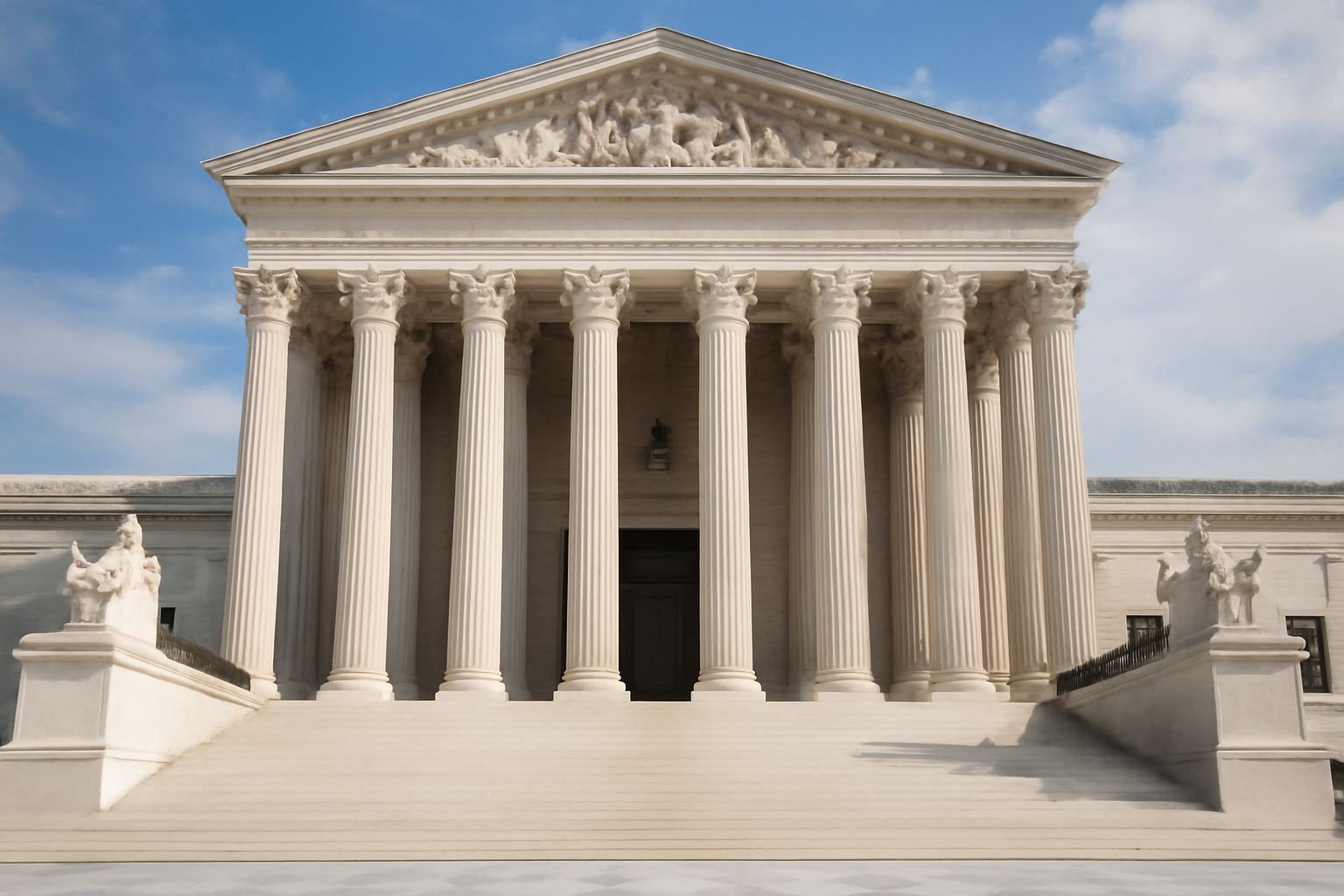
The Federal Communications Commission has asked the U.S. Supreme Court to stay a lower-court ruling tied to how broadcasters must price political advertising, according to a report carried by Carolina Journal via Google News. The agency's own filing, the referenced summary and the article it points to, are the only confirmed facts in circulation as of this writing. This piece is labeled Opinion.
What Is the FCC Actually Asking the Supreme Court to Do?
A stay request is narrow by design. It does not ask the justices to decide who is right on the merits of the underlying election ad rate dispute. It asks them to freeze a lower court's ruling so it cannot take effect while the full appeal plays out. Carolina Journal's reporting, as relayed through Google News, confirms the FCC has filed such a request but does not spell out which circuit court issued the order being challenged, nor the precise rate formula at issue. That is a meaningful gap. Readers deserve to know whether this is about the longstanding "lowest unit rate" protections Congress built into the Communications Act for candidates buying airtime close to an election, or some narrower administrative dispute over how stations calculate that rate. Until a fuller docket entry or opinion surfaces, that specific mechanism remains unconfirmed by the sourcing available.
Why Do Election Ad Rates Matter to Broadcasters and Campaigns?
Whatever the precise mechanism, the stakes are not abstract. Political campaigns spend heavily on broadcast time in the closing weeks of a race, and federal law has long required stations to sell that time to candidates at rates no higher than their best commercial rate. Disputes over how that rate is calculated affect both sides of the transaction: stations that argue they are being forced to undersell inventory, and campaigns that argue loopholes let broadcasters inflate prices when political money is on the table. A ruling that changes the rate formula, even temporarily, can shift ad budgets in real time for candidates already buying time ahead of upcoming contests.
The FCC's request freezes nothing on the merits. It only pauses the clock while the Supreme Court decides whether to look closer.
What Happens Next at the Supreme Court?
Stay applications of this kind typically go first to the circuit justice assigned to the relevant geographic region, who can act alone or refer the matter to the full Court. There is no fixed timeline for a ruling on a stay request, and the Court can grant, deny, or hold the application pending further briefing. None of the available sourcing indicates which path the justices have chosen or when a decision might come. Readers tracking the case should expect updates to arrive through the Supreme Court's own docket system before they appear in secondary coverage.
Where Does Quote Conservative Come Down on This?
An agency asking the nation's highest court to pause a rate ruling it dislikes is not unusual, but it is still worth scrutinizing. The FCC answers to no electorate directly, and when it reaches for an emergency stay rather than letting an adverse ruling work through the ordinary appellate calendar, that choice itself is a signal the agency views the status quo as untenable for broadcasters or for its own enforcement posture. Congress wrote the lowest-unit-rate rule to keep political advertising accessible, not to hand regulators a blank check to rewrite pricing rules by litigation shortcut. If the underlying ruling genuinely threatens that balance, the FCC's urgency is defensible. If the agency is simply trying to avoid an unfavorable precedent before it fully sets in, that is a different and less sympathetic motive. The public record so far does not resolve which is true.
How Does This Fit Other Fights Over Federal Authority in the Courts?
Emergency applications to the Supreme Court have become a recurring feature of disputes between federal regulators and the lower courts, and this case joins a broader pattern of agencies and states testing the limits of who gets the final word before an election cycle begins in earnest. Readers following the mechanics of federal versus state authority in these disputes may find useful grounding in Understanding Federalism: A Concise Guide. Separately, concerns about the integrity of the electoral process more broadly have been documented in reporting on U.S. election fraud cases rising amid integrity concerns, a reminder that ad-rate mechanics are one small piece of a much larger set of rules campaigns and regulators are contesting simultaneously this cycle.
The FCC's stay application remains pending. Quote Conservative will update this report when the Supreme Court acts or when additional details about the underlying ruling become available.
mindfulAI Keyboard — An iPhone keyboard that rewrites a draft in a tone you pick. Four free AI actions a day.