politics
Supreme Court SAVE Ruling Fuels Voter Roll Purge Debate
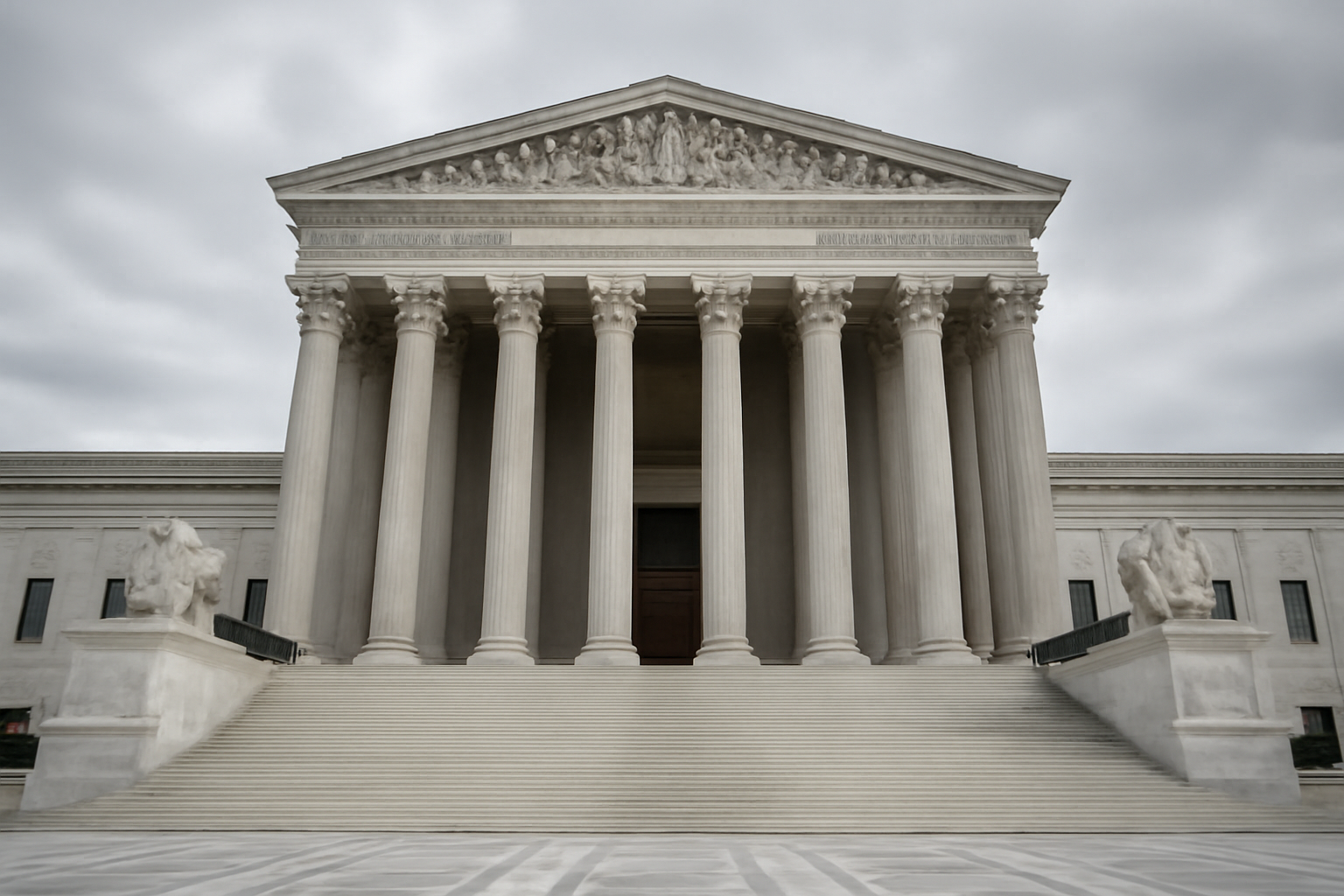
Democracy Docket, the voting-rights-focused legal outlet, reports that a Supreme Court ruling touching the federal SAVE database signals the justices may be open to weakening a longstanding protection against removing voters from the rolls in the run-up to an election, according to the outlet's own account of the decision. The outlet frames the decision as a signal, not a final word, on how far states can go in using citizenship-verification tools to clean voter rolls close to Election Day.
This is a commentary piece. The underlying opinion has not been independently reviewed by this desk beyond Democracy Docket's characterization, and readers should treat case-specific details — the vote count, the exact holding, the parties involved — as unconfirmed until the primary opinion is available for direct review.
What did Democracy Docket report about the SAVE ruling?
The outlet's headline states plainly that the Supreme Court's action "signals path to weaken key protection against last-minute purges." That is a characterization by a legal outlet with an explicit voting-rights mission, and it deserves to be read as advocacy journalism rather than a neutral case summary. Still, the framing itself is newsworthy: it indicates the Court took up or acted on a matter involving the SAVE database and that at least one closely watched legal press outlet believes the result narrows protections voters have relied on.
What is the SAVE database and why does it come up in election disputes?
SAVE, short for Systematic Alien Verification for Entitlements, is a federal system historically used to confirm immigration and citizenship status for benefits eligibility. States have increasingly sought access to it, or to state driver's license and DMV records cross-checked against it, to identify noncitizens who may be improperly registered to vote. Disputes over SAVE-based purges tend to center on timing: removing a voter from the rolls based on a database match raises different stakes depending on whether it happens months before an election or in the final weeks.
Does federal law limit purges close to an election?
Democracy Docket's framing points to a "key protection against last-minute purges," a reference to the general principle, well established in election administration, that list maintenance close to an election carries higher risk of disenfranchising eligible voters through errors, mismatches, or processing delays. Whether the ruling in question actually narrows that principle, and by how much, is the contested claim at the center of the outlet's reporting. This desk has not seen the opinion's text and cannot independently verify the scope of any change.
Why does this touch federalism and state election authority?
Election administration sits at the center of a long-running federalism argument: states run elections, and the federal government's role is narrower than in most other domestic policy areas. Quote Conservative examined that structural question directly in Understanding Federalism: A Concise Guide, which lays out how the Constitution divides authority between state and federal actors. A ruling that gives states more latitude to use citizenship-verification tools like SAVE fits a pattern of the Court deferring to state authority over the mechanics of running elections, a deference conservatives have generally favored and voting-rights advocates have generally opposed when it touches roll maintenance.
How does this compare to other state-level election disputes making news?
Election administration fights are playing out at the state level as well as the federal level. In Wisconsin, the state Supreme Court recently held off on suspending Milwaukee County Judge Hannah Dugan's law license amid a separate legal dispute, a reminder that state judiciaries are actively weighing in on election- and law-enforcement-adjacent controversies independent of federal courts. The SAVE ruling, whatever its final scope, will likely generate parallel state-court litigation as advocacy groups on both sides test its limits in specific jurisdictions.
What should voters and state officials watch next?
The practical question is whether states move quickly to expand SAVE-based roll checks ahead of the next election cycle, and whether voting-rights groups file suit arguing that any expedited purges violate remaining federal protections. Conservatives who favor tighter voter-list accuracy will likely welcome a ruling that gives states more room to act on citizenship-verification data. Voting-rights advocates will likely argue that any weakening of timing protections increases the risk that eligible voters are wrongly removed with too little time to fix the error before casting a ballot. Both arguments deserve to be weighed against the actual text of the ruling once it is publicly available in full.