politics
Harvard Law Says Supreme Court Checked Trump This Term
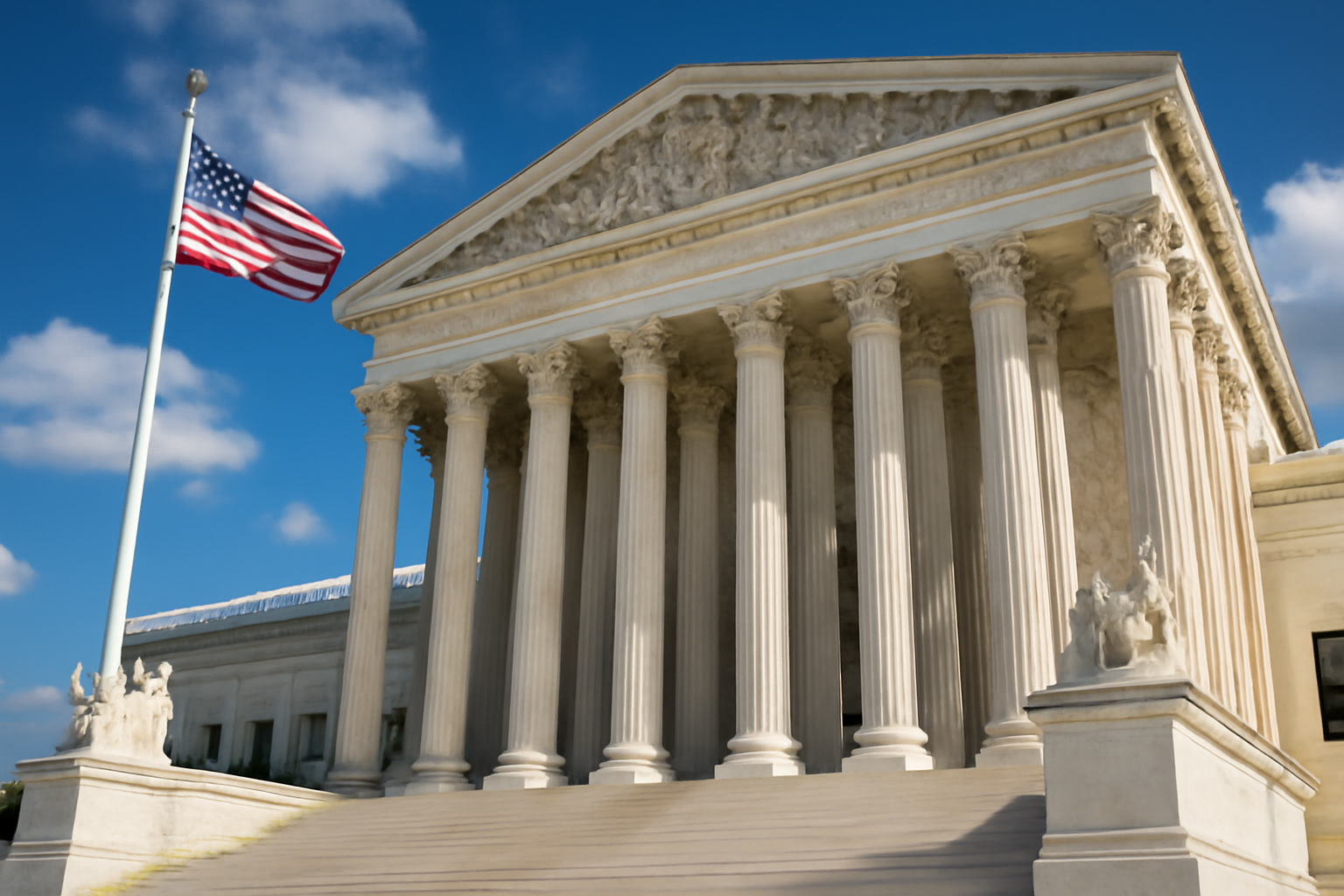
Harvard Law School has published an assessment of the Supreme Court's 2025-26 term describing it as "a conservative Court that has also checked the Trump administration," according to the Harvard Law School review. The framing invites a question the piece itself does not fully answer: what does it mean for a Court built by Republican presidents to be labeled a check on a Republican administration?
What did Harvard Law School's assessment say?
The headline characterization, published under the Harvard Law School name, pairs two claims in one breath: the Court remains conservative in composition and doctrine, and it has also ruled in ways that constrain the Trump administration during the current term. Readers looking for the specific cases behind that claim will need to consult the full Harvard Law School review directly, since the framing itself is the news.
How can a conservative Court also check a Republican administration?
The premise assumes tension where none needs to exist. A judiciary applying settled statutory text, constitutional limits on executive power, or procedural requirements is not switching ideological teams when it rules against an administration of either party. Conservative legal theory has long argued that courts should decide cases on the law rather than on which party appointed the officials in the dispute. A ruling against the executive branch, under that theory, is not evidence of a Court checking Trump specifically — it is evidence of a Court checking the presidency, a function built into Article III regardless of who occupies the Oval Office.
What does "checking" the administration mean under separation of powers?
Quote Conservative's own explainer on federalism lays out the structural logic: power divided among branches and levels of government is designed to produce friction, not partisan alignment. See Understanding Federalism: A Concise Guide. A Court that rules against an administration's position in some cases while upholding a conservative reading of the Constitution in others is doing exactly what the framers intended courts to do — neither rubber-stamping nor obstructing, but adjudicating.
What's missing from the Harvard framing?
The phrase "checked the Trump administration" carries an implicit assumption that the administration needed checking, and that doing so required departing from conservative jurisprudence. Neither assumption is established by the headline alone. Without the underlying case list, dissent counts, or vote breakdowns, readers cannot verify whether the Court's rulings reflect ideological drift, straightforward application of precedent, or narrow procedural holdings that have little to do with politics at all.
What should readers watch for next?
Anyone evaluating the term should ask what specific rulings Harvard Law School's analysts point to, what legal doctrine each ruling rested on, and whether similar reasoning would have applied to a Democratic administration facing the same fact pattern. A Court that answers that question consistently, regardless of who is in the White House, is doing its job — not picking a side.